
Outdoor Pet Memorial Ideas for Your Garden
2026-09-18
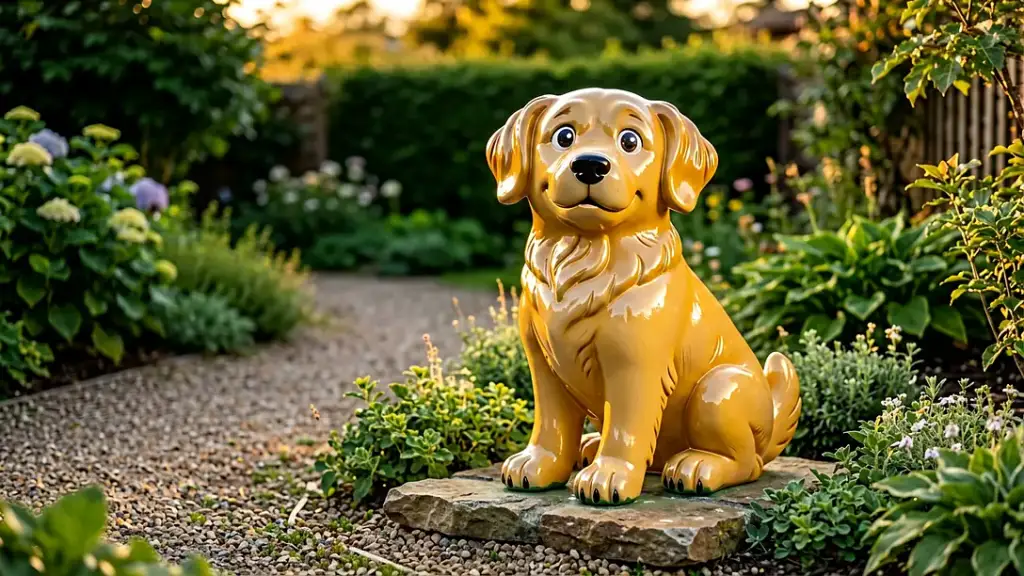
Most of the families who write to us about a memorial have already walked the garden a dozen times, working out where it should go. That instinct is right: the spot decides the memorial far more than any catalogue does. What follows are the outdoor pet memorial ideas we actually see still looking well after five winters — what each one asks of you, and which to choose when the garden is where you want the memory to live.
Decide the spot before the design
Three questions settle almost every garden commission before anyone talks about sculpture.
Will you pass it, or visit it? A memorial on the way to the back gate is a daily presence; one at the end of a path is a destination. Both work, but they want different objects. A daily one has to read at a glance from three metres away; a destination one rewards standing still, and can carry detail you only see up close.
What does the light do there? Watch the spot at the hours you are usually home. A painted surface in morning sun, or a pale stone in late-afternoon light, does most of the work for you; a corner that is dim all day will flatten any piece, whatever it cost. Half a metre of shift — out from under a shrub, along a wall — is often the difference between a memorial that lifts and one that disappears.
Who else uses the garden? Small children, a shared courtyard, a rented house with a landlord. This is the question that quietly rules out heavy stone and settles on something movable, and it is worth answering honestly before you fall in love with a design.
Idea 1: A life-size cartoon sculpture of your pet
This is what we make, so weigh our bias. A painted fibreglass sculpture from 1.5 m up, built from your photographs and installed in the garden, is the only idea on this list that gives a garden a focal point rather than a marker — something the eye lands on from the far end of the lawn.
The cartoon treatment is a deliberate choice, not a shortcut. Rounded proportions and a slightly oversized head are what make a piece read as warm rather than formal, and they are also what let us carry the details that actually identify your animal: the set of the ears, the way the weight sits on the front paws, one paw turned slightly out. The coat is colour-matched to your photographs and finished in multi-layer automotive paint under a UV clear coat, which is why it holds pigment where bare metal cannot. Treated sensibly, the finish is good for 15 to 20 years outdoors before it wants a recoat; the full comparison is on our materials page.
Budgets are the honest part. A painted fibreglass piece between 1.5 m and 2.0 m typically runs $1,500–$4,900, with detail and scale climbing from there. Pieces in this range, and the placement questions behind them, are collected on our pet memorial sculpture page; if you want the piece at garden scale rather than shelf scale, start with life-size cartoon sculptures. If the piece is for a dog, pet memorial statues for dogs breaks the same decision down by size class and budget before you commit to a scale. Lead time is usually six to ten weeks from approved design, which is the one real cost of choosing a commission — the week-by-week stages are set out in our process.
Idea 2: An outdoor pet memorial stone or plaque
Outdoor pet memorial stones are the quiet option, and for a lot of gardens they are the right one. A 30–60 cm slab of granite, slate or cast stone, engraved with a name and a line, set flush with the path or raised on a low base. Granite holds an edge for decades; slate weathers to a soft grey that suits old gardens.
What a stone does not do is occupy space. It is read, not met — you look down at it rather than up to it, and it will not carry a whole flower bed the way a figure does. Plan on resealing a stone finish every two to three years if you want the lettering to stay crisp, and keep the mower clear of the edge. If you also need a home for the ashes themselves, the practical options are set out in what to do with pet ashes.
Idea 3: A planted memory bed with the sculpture as the centrepiece
The strongest version of ideas 1 and 2 together: a sculpture standing in a planted bed rather than on bare gravel, with low ground cover around its base and a couple of taller plants behind it for backdrop. It is the difference between a statue placed in a garden and a garden built around a statue. Species with a long season — lavender, salvia, hardy geranium, a low ornamental grass — keep the bed alive under the piece from spring onward, and the planting is the part you can change as the years pass without touching the sculpture.
Five more garden pet memorial ideas that cost very little
- A bench with a small plaque. The memorial you sit with. Useful in its own right, and the least demanding option on this list.
- A birdbath or a water bowl kept filled. Animals come to it; the garden keeps moving around the memory. Cheap, and quietly effective.
- A tree planted as a living memorial. Excellent where there is room for it; the practical caveats are root spread and picking the right species for the soil before you dig.
- A cast stepping stone pressed with a paw print. Small, private, and often the one visitors never notice unless you point it out — which some families prefer.
- A dedicated corner of the border. No object at all: one planting you agree is theirs, kept up while everything else changes. Free, and it works surprisingly well.
What each idea costs you over ten years
The purchase price is rarely the whole story. This table is what each of the six main options asks of you once it is in the ground:
| Memorial idea | Looks like outdoors | Upkeep | Best for |
|---|---|---|---|
| Life-size fibreglass sculpture | Colour-matched painted figure, 1.5–3 m | Wash and inspect once a year | A garden you want to be dominated by it |
| Engraved stone or plaque | 30–60 cm granite, slate or cast stone | Reseal every 2–3 years | A quiet marker close to a path |
| Sculpture in a planted bed | Figure plus year-round planting | Usual garden maintenance, seasonal cut-back | The strongest visual result |
| Bench and plaque | Timber or cast seat with an inset plate | Oil or varnish every year or two | A memorial you sit with |
| Water bowl or birdbath | Small stoneware or cast object | Keep clean, drain before hard frost | Small gardens and shared courtyards |
| Planted bed or tree only | Nothing contrived — just planting | Watering, pruning, patience | Rented ground and long-term gardens |
* Upkeep figures are what well-kept gardens actually require, not a warranty. A sculpture under trees or on a coast needs more attention than one on a sheltered lawn.
Two mistakes we see in garden memorials
Sizing for the photograph instead of the distance. A figure that fills the frame of a phone snap looks timid in a garden; open space is brutal to small pieces. If the memorial will be seen across a lawn, go up a size rather than down. A 1.5 m piece suits a border or a courtyard; a lawn edge usually wants 2 m or more.
Choosing a material that needs you. The memorial is the wrong place for a high-maintenance choice. If you are the person who will be sealing stone or repainting timber every second spring, and you know you will not, buy the option that sits there quietly instead.
If the garden is the place
A garden memorial has one advantage no indoor piece has: it is already where the two of you spent your time, and it will go on changing with the seasons around the piece. If that sounds like the right tribute, the next step is small — two or three photographs from different sides, a measurement of where it will stand, and a note about the light. You will get an honest quote and an honest view of what your photos can and cannot support, free, within 24 hours. Send them through get a quote, and if you are still weighing a commission against a reproduction, the distinction is set out in is a custom pet sculpture art?.
More from the Workshop
Ready to Start?
Send us photos and get a free, honest quote within 24 hours — no obligation.
Get a Free Quote