
How Many Photos Do You Need to Commission a Sculpture?
2026-09-10
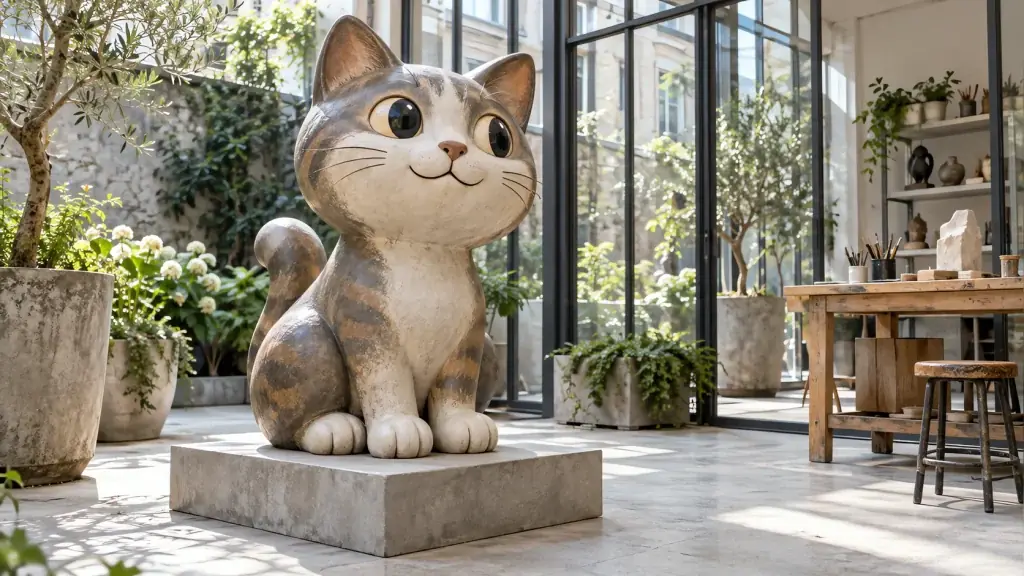
A sculpture built from photographs is a decision made from flat images, and the quality of that decision is almost entirely in the photo set. The single most common cause of a revision is not the sculpting — it is a photograph that did not show what we needed to see.
The short answer
Two or three clear photographs are usually enough:
- one straight-on front view, at eye level of the subject
- one profile, from either side
- one shot that shows the pose or characteristic you care about most
That is the minimum for a working likeness. If you have more, send more.
What each angle is for
The front view
This establishes the proportions: how wide the head is against the shoulders, how far the eyes sit apart, the shape of the muzzle or the jawline. Without it we are guessing at the widest dimension, and that is the mistake people notice first.
The profile
The profile carries everything the front view cannot: the length of the nose, the set of the ears, the curve of the chest, the angle of the tail. For animals it is the single most useful photograph, because so much of what makes a dog read as that dog is in silhouette.
The character shot
The third photograph is the one you would show someone who never met the subject. It usually shows a pose, a head tilt, a habit. We sculpt toward that, because it is what makes the finished piece read as a particular animal or person rather than a generic example.
What a phone video adds
A video adds something a still cannot: how the subject moves. Even a poor, shaky clip often tells us more about posture and proportion than a sharp photograph, because we can see the body from angles nobody thinks to photograph. If the subject is still with you, a thirty-second video walking around them is worth more than ten stills.
Old or low-resolution photographs
Usually workable, and for memorial pieces it is often all there is. Send what you have. Old photographs, phone snapshots and stills pulled from video are all normal, and we will tell you honestly what can be read from them before you commit to anything.
Where the photograph is weak, we say which details can be inferred and which cannot. A face that is small, dark or turned away limits how far the likeness can be pushed, and no amount of sculpting fixes a detail that was never recorded.
When a photo set is not good enough
- Every photo is from the same angle. Three front views give us less than one front view and one profile.
- The subject is backlit or in deep shade. We can lift exposure, but a silhouette has no surface information.
- The face is tiny in frame. For a portrait this is the limit that matters most; for a full-body cartoon sculpture it matters far less.
- Heavy filters. Anything that has altered the shape of the subject is worse than an unedited original.
How to send them
Send the originals, not screenshots, and do not crop or colour-correct them. Cloud links are fine. Label which photograph you think is most like the subject — that is useful information, and it often matches what we would have chosen.
Then we will tell you within 24 hours what we can do with them. If you have ever wondered whether the result counts as art, that is a separate question and we have answered it at length.
More from the Workshop
Ready to Start?
Send us photos and get a free, honest quote within 24 hours — no obligation.
Get a Free Quote