Biscuit — Vinyl-Toy Cartoon Cat, Bakery Forecourt, Seoul
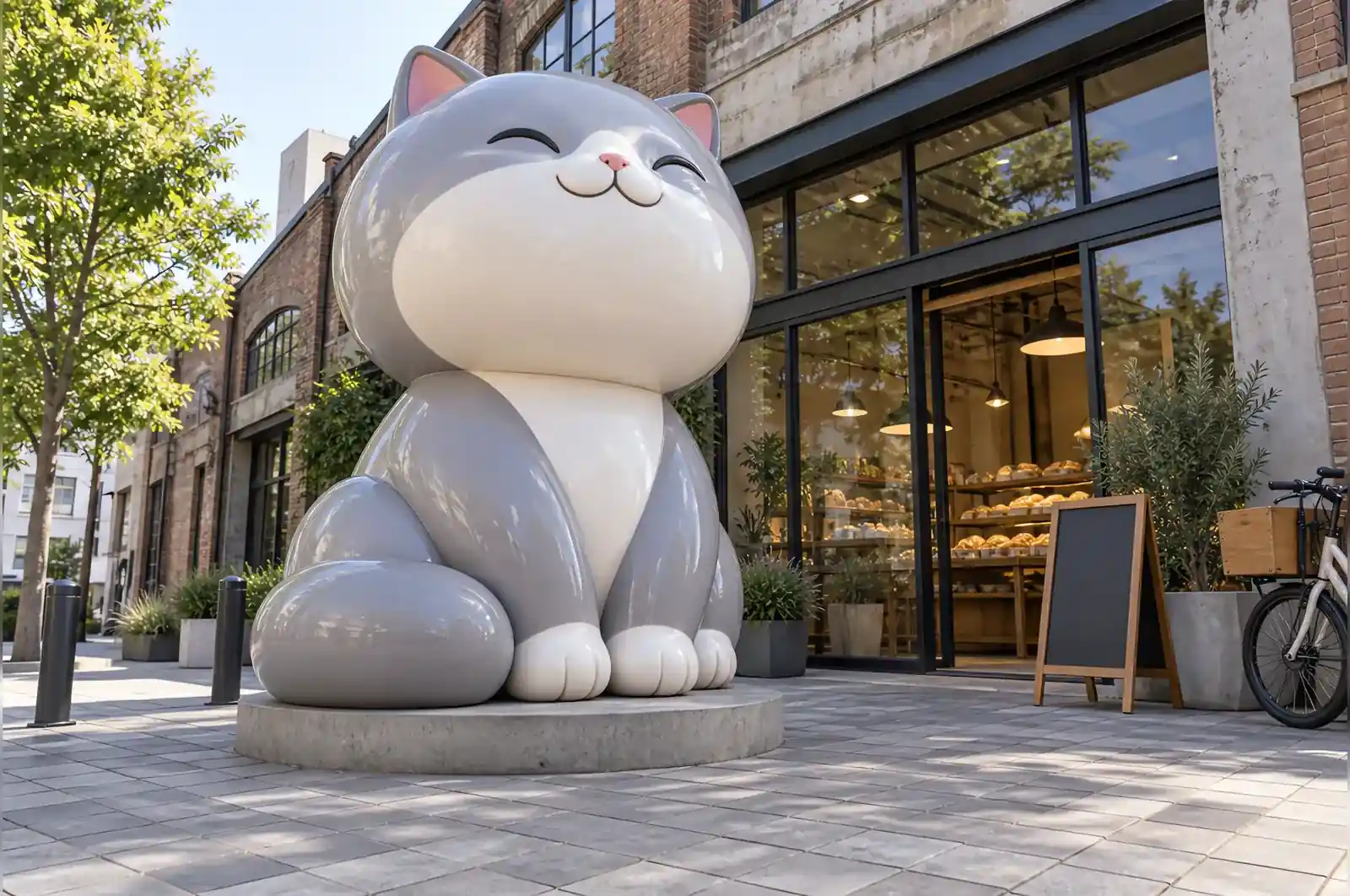
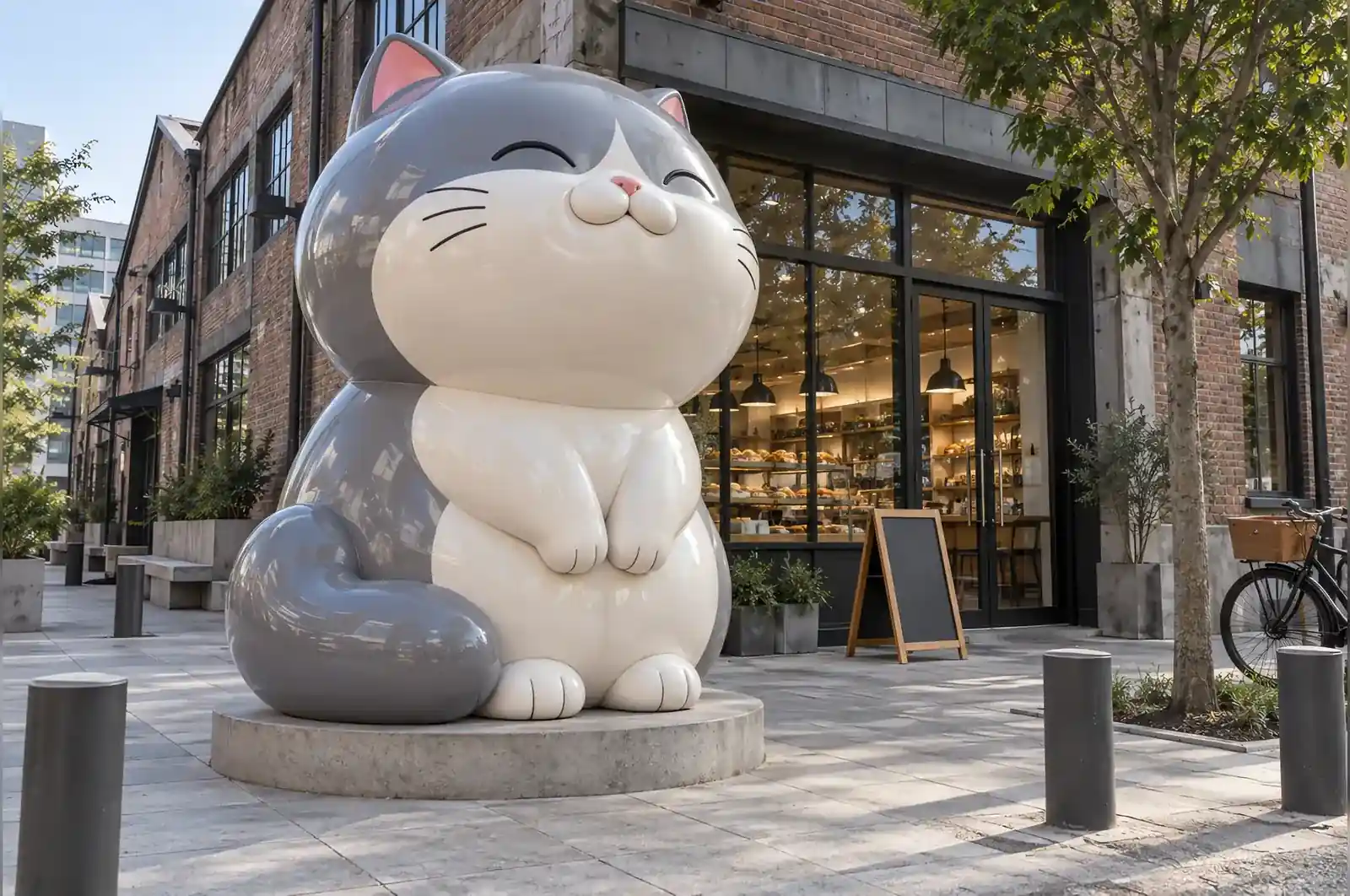
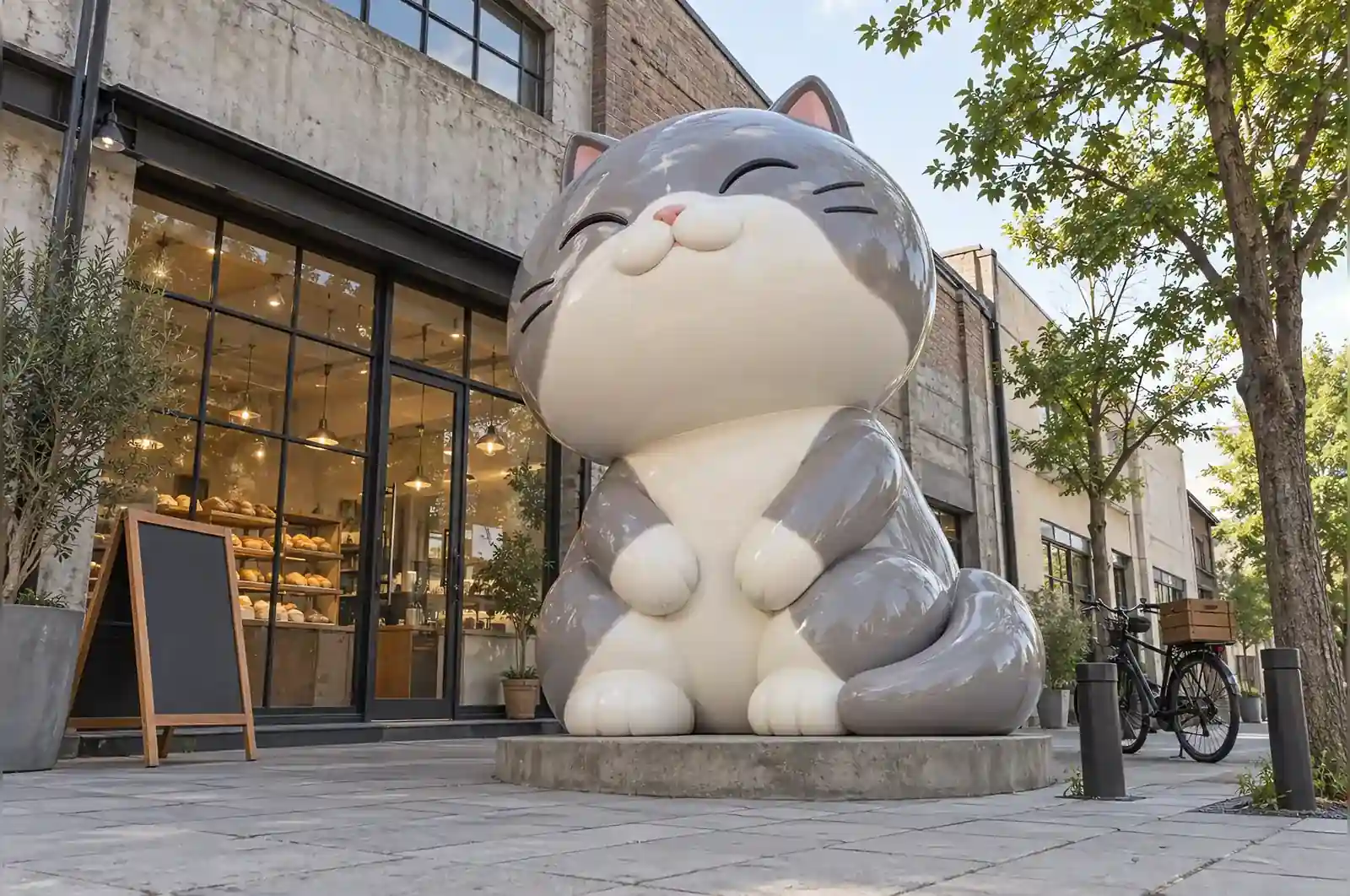
Sung in Seongsu-dong is a bakery the size of a large cupboard, and it sells out by eleven in the morning. The owner wanted a cat outside that would do the job of a sign without being a sign.
The brief
A fat cat, seated, about 1.9 m, in a colour that would not clash with the shop. One condition, delivered as a warning rather than a request: it must not look like a mascot costume. Bakers are sensitive about their trade looking cheap.
Choosing the vinyl-toy language
We proposed building it as an inflated toy: balloon volumes, fat rounded seams at every join, and a surface with the dense even shine of a vinyl figure rather than the wet shine of lacquer. The seams are the important part. They are what tells your eye the object was moulded rather than grown, and they are why the piece reads as a designed product instead of a large ornament.
The body is essentially three spheres. The head is one, larger than the other two combined. Everything else — ears, tail, paws, muzzle — is an appendage that was made as small as it could be without disappearing.
Moulding a seam that looks intentional
Real seams in a vinyl toy are tool marks from the mould halves. Ours had to be modelled. Each seam is a narrow raised ridge about 6 mm wide, placed on the actual geometry of the model rather than painted on, so it catches light along its whole length. The ridge had to be sanded to an even height across the whole piece or the shine breaks and the illusion goes with it.
Colour and the shopfront
We settled on a warm caramel with cream and a single raspberry accent inside the ears, drawn from the bakery’s own packaging. The owner had wanted pink; this is the compromise and it was the right one, because caramel in a glossy finish reads as baked goods and pink would have read as candy.
Season one
Seoul winters are hard on painted outdoor work and the owner now covers it at night. The coat has held. So has the queue, which is now longer than the shop.
What the shopfront fixed
Three things were non-negotiable on this site, and each one came from the forecourt rather than from taste. The first was the height. At 1.9 m the cat has to do the job of a sign from across the street, which means it has to clear the people standing in front of it; drop it to about a metre and it would have been hidden behind the queue that forms before eleven, and the bakery would have lost the only reason it commissioned the piece. The second was the finish. Because the cat sits in the open at pavement level, it takes direct daylight and the reflections off the gloss are what carry the colour; a matte surface would have gone flat and grey in that same light, and the caramel would have lost the baked-goods reading. The third was the seams. At this height, where the piece is the closest thing a customer sees before the counter, the raised ridge is the detail that stops it reading as a plush toy.
Had those three not been locked in, two things would have changed. If the bakery had wanted the cat indoors behind glass rather than on the forecourt, the height would have come down and the UV clear coat would have been unnecessary. If the placement had been further back from the pavement, the seams would have been deepened so they still caught light at distance. Both are simple at the model stage; the placement decides them before anything is moulded.
Seams and the Seoul weather
The piece is hand-laminated FRP over an internal steel frame, and the part that took longest was not the body but the seams. Each ridge is 6 mm wide and raised off the surface of the model, which means it has to be built into the mould rather than added afterwards — there is no line to paint on, so the tooling has to be right the first time. Because the head is larger than the other two spheres combined, most of the weight sits high on a 1.9 m shell, and the steel frame is arranged to carry that mass down into the base rather than let the laminate cantilever it. The gloss is a two-layer job: a colour coat and a UV clear coat over it. In a Seoul winter the clear coat is what keeps the surface from chalking; the owner’s habit of covering the piece at night, described above, is the part the clear coat cannot do for itself.
Maintenance at this size is mostly about the seams and the ground line. The 6 mm ridge is the most exposed part of the piece, because it is the highest relief on the surface, and a chip there shows as a break in the shine along the whole ridge. A wipe-down of the gloss with a soft cloth, and a check of the seam ridges for hairline cracks at the start of each season, is the whole routine. The frame and laminate need no scheduled work.
Questions to settle before you commission
This commission came to us with three things already decided, and they are the three things to settle before asking for a quote on anything similar.
The first is placement. Is the piece a sign, or is it an object? Here it had to read from across the street, which fixed the 1.9 m height and the glossy finish. If the same cat had been intended as a piece of interior display, the brief would have been about surface and silhouette rather than distance.
The second is the constraint that is a prohibition rather than a request. Here it was “must not look like a mascot costume”, and that single line decided the seams, the proportions and the gloss. Set that line before the model is started, because it is what the fabricator will hold the whole build against.
The third is the finish. A vinyl-toy gloss with modelled seams is a different tooling job from a sculpted matte surface, and the difference is visible in the mould. Decide which reading you want before quoting, not after the model is approved.
Nobody has ever asked us what it is. They ask if they can take a photo, then they come in and buy something.
A bakery in Seongsu-dong, Seoul