Cartoon Bust — Master Potter, Porcelain Treatment, Stoke-on-Trent
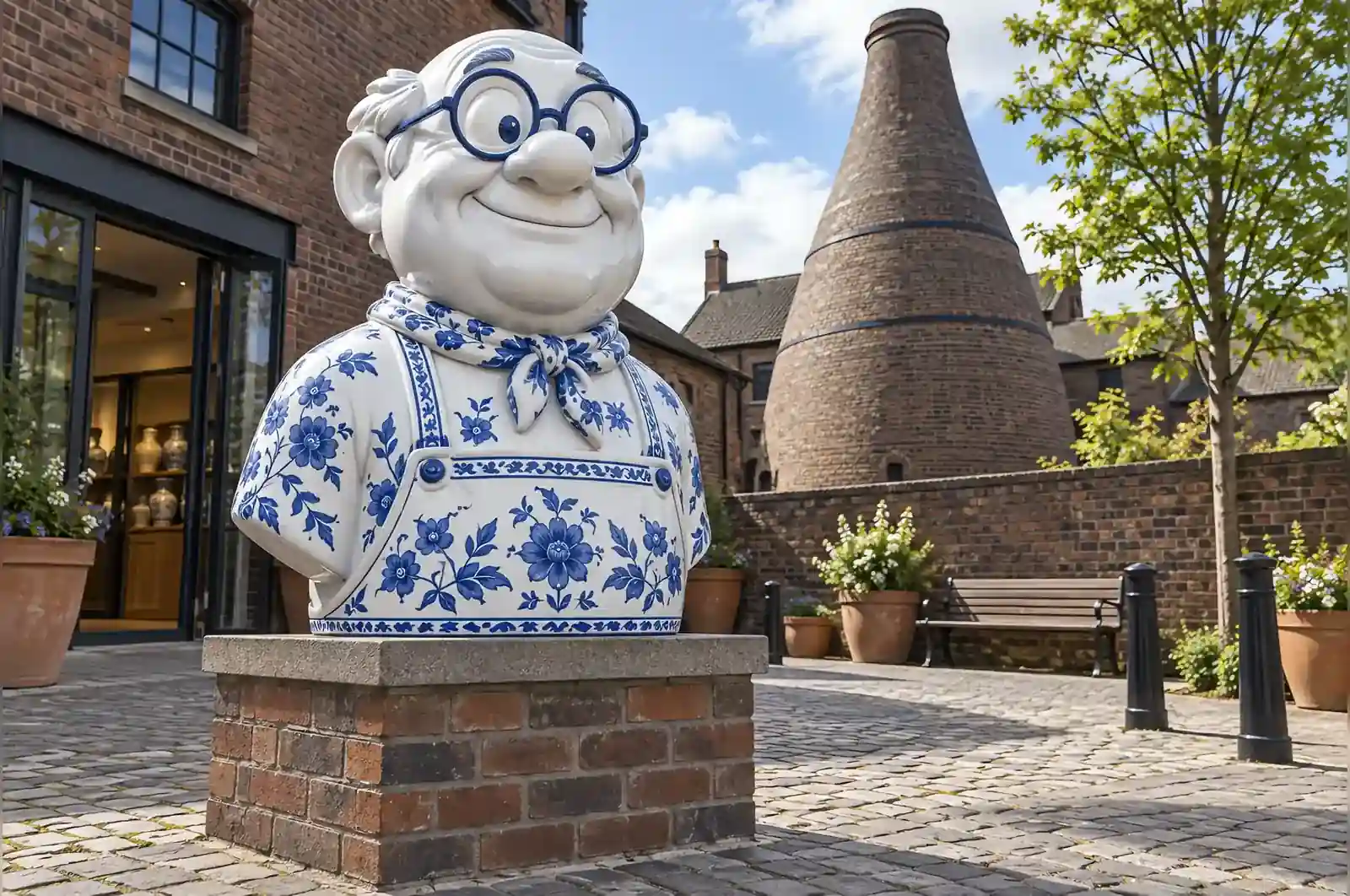
He threw pots in the same factory for thirty-eight years, made the tea for the apprentices, and taught half of the current staff how to centre clay on a wheel. He had one condition when the museum commissioned his bust: not porcelain.
Then we showed him the drawings
His objection was reasonable. Porcelain is the thing he spent his life throwing and it breaks, and a bust of a potter in a material that shatters when someone leans on it is a joke at his expense.
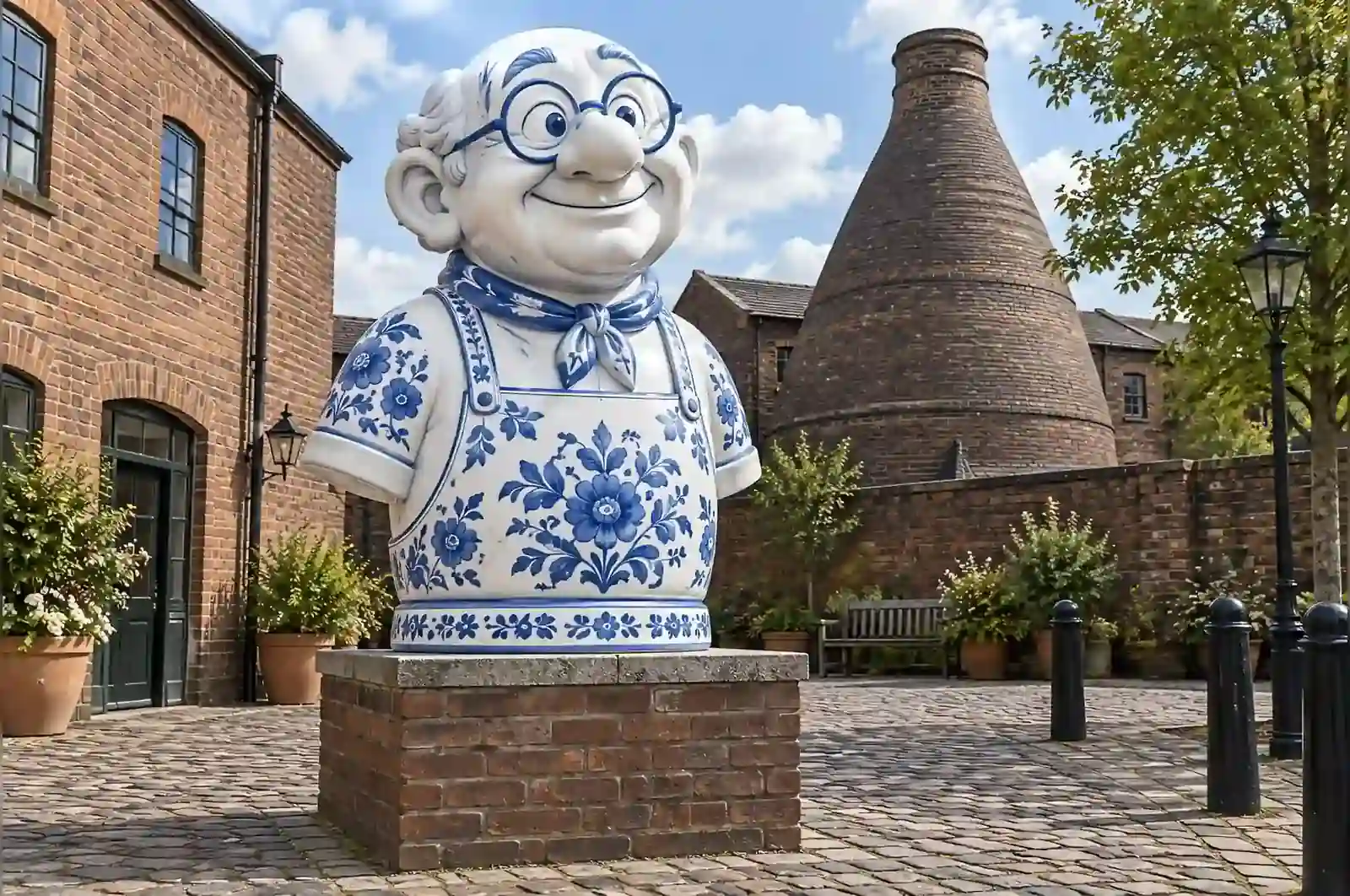
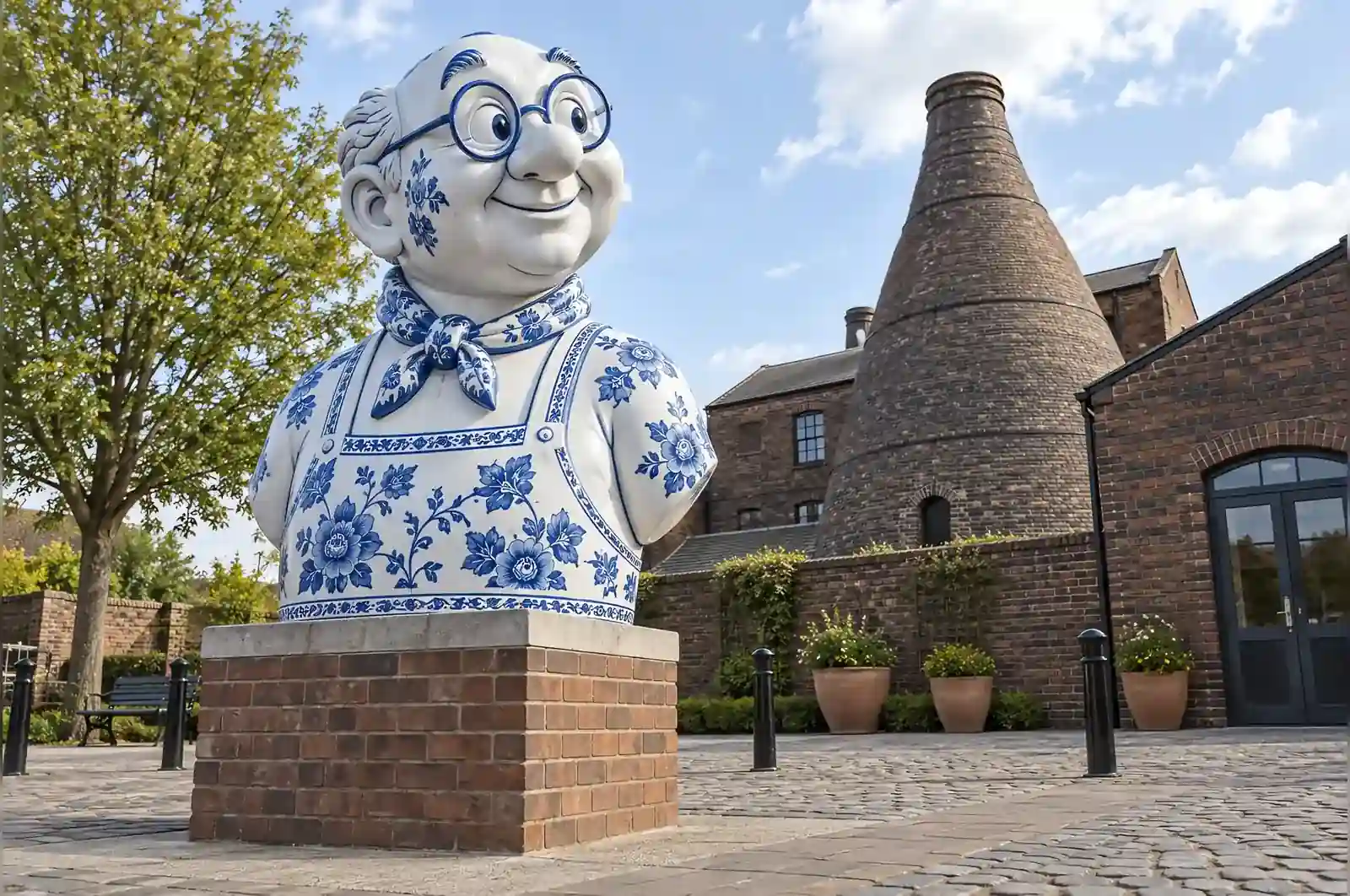
What we proposed was porcelain decoration, not porcelain. Fibreglass, painted chalk-white, with cobalt blue floral scrollwork and narrow border bands, and a high gloss clear coat over the top. From two metres it reads as a piece of blue-and-white ware. It weighs 70 kg and it does not break.
Painting as the factory would
The decoration follows the rules of the trade rather than the rules of painting. A band at the base of the neck. A band at the shoulder, doubled. A collar of scrollwork across the chest with the vine running left to right, because that is the direction a pattern is applied on a turning form.
The face carries almost nothing: two small cobalt marks at the temples and the outline of the spectacles. Then, on the crown of the head, one flower — the same four-petal motif the factory has used on its teapots since the 1930s, which he picked himself and which took him about four seconds to choose.
What it is made of, and what it looks like
The potter has since told visitors that it is porcelain and that he is not going to argue about it any more. We consider that settled. The gloss is a two-pack automotive system, which is considerably more robust outdoors than any fired glaze would be, and the piece stands in the museum garden in full weather.
In the garden
It stands at the end of the path between the kiln shed and the slip house, at 1.7 m, on a plain brick plinth. Apprentices are photographed next to it on their first day. Nobody has ever been instructed to do that.
I told them not to make it in porcelain. They made it look like porcelain, told me it would not break, and were right about both.
A pottery museum in Stoke-on-Trent, England