
Cartoon Bust — Veteran of the Royal Engineers, Portsmouth
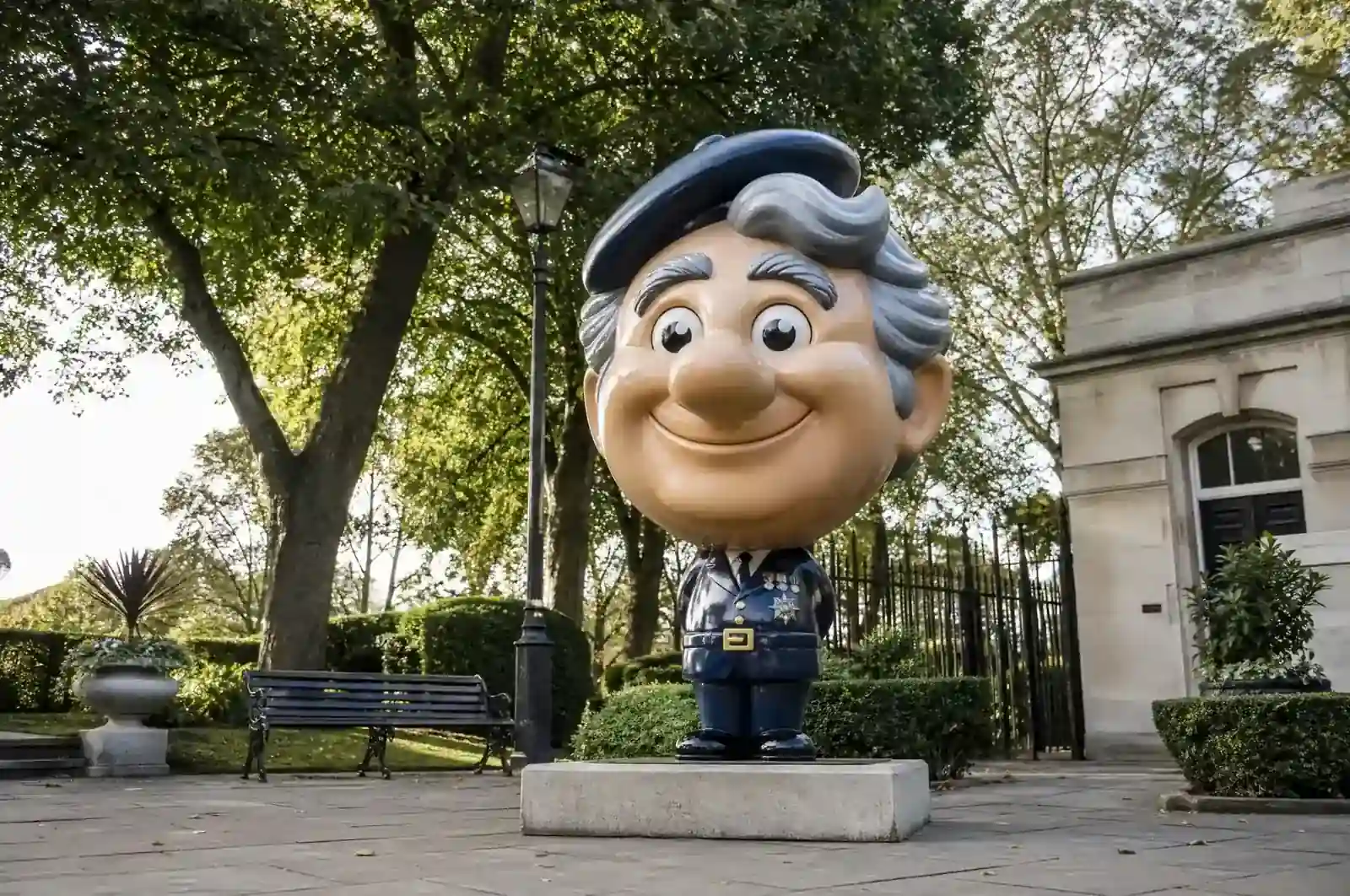
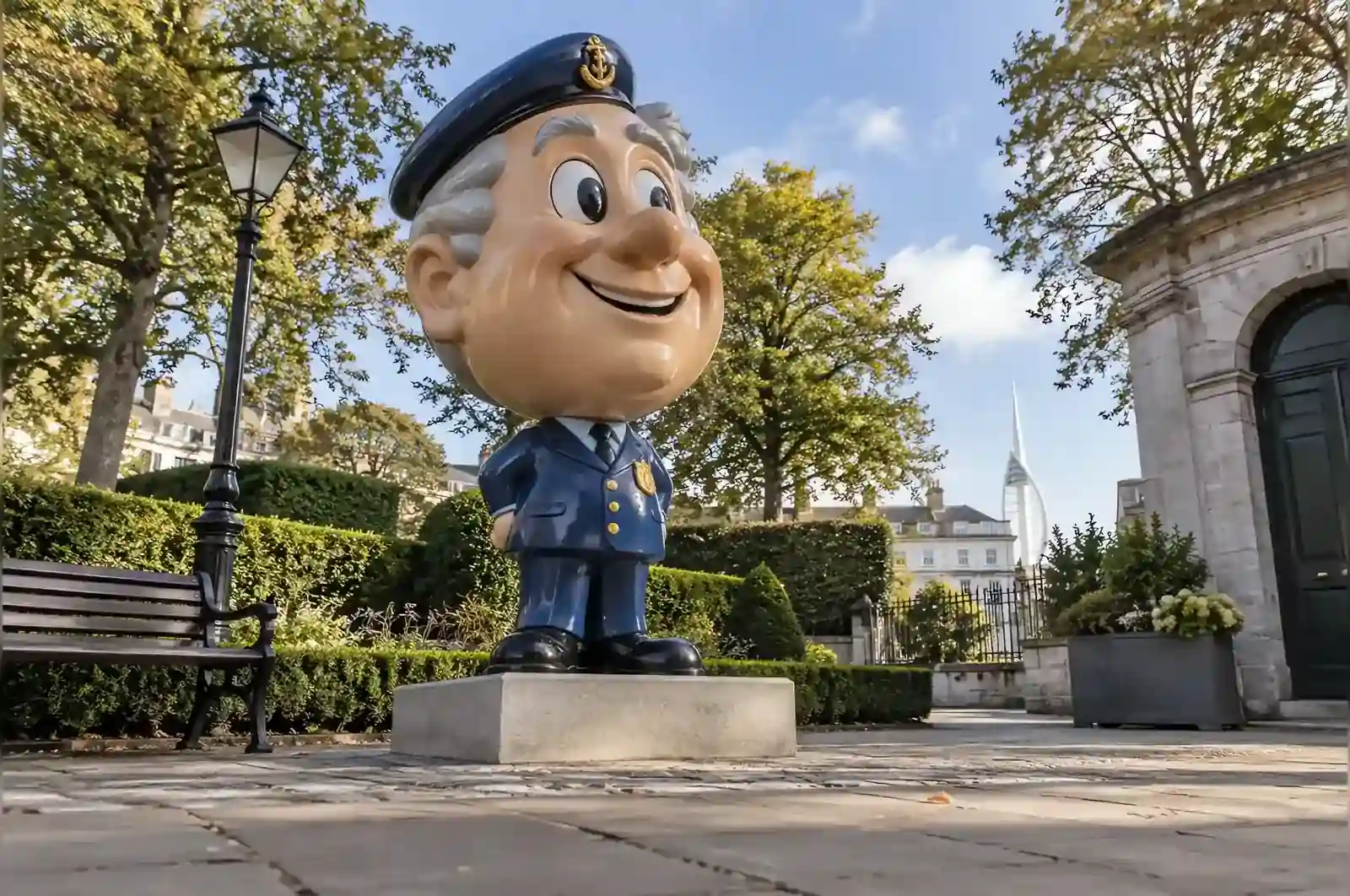
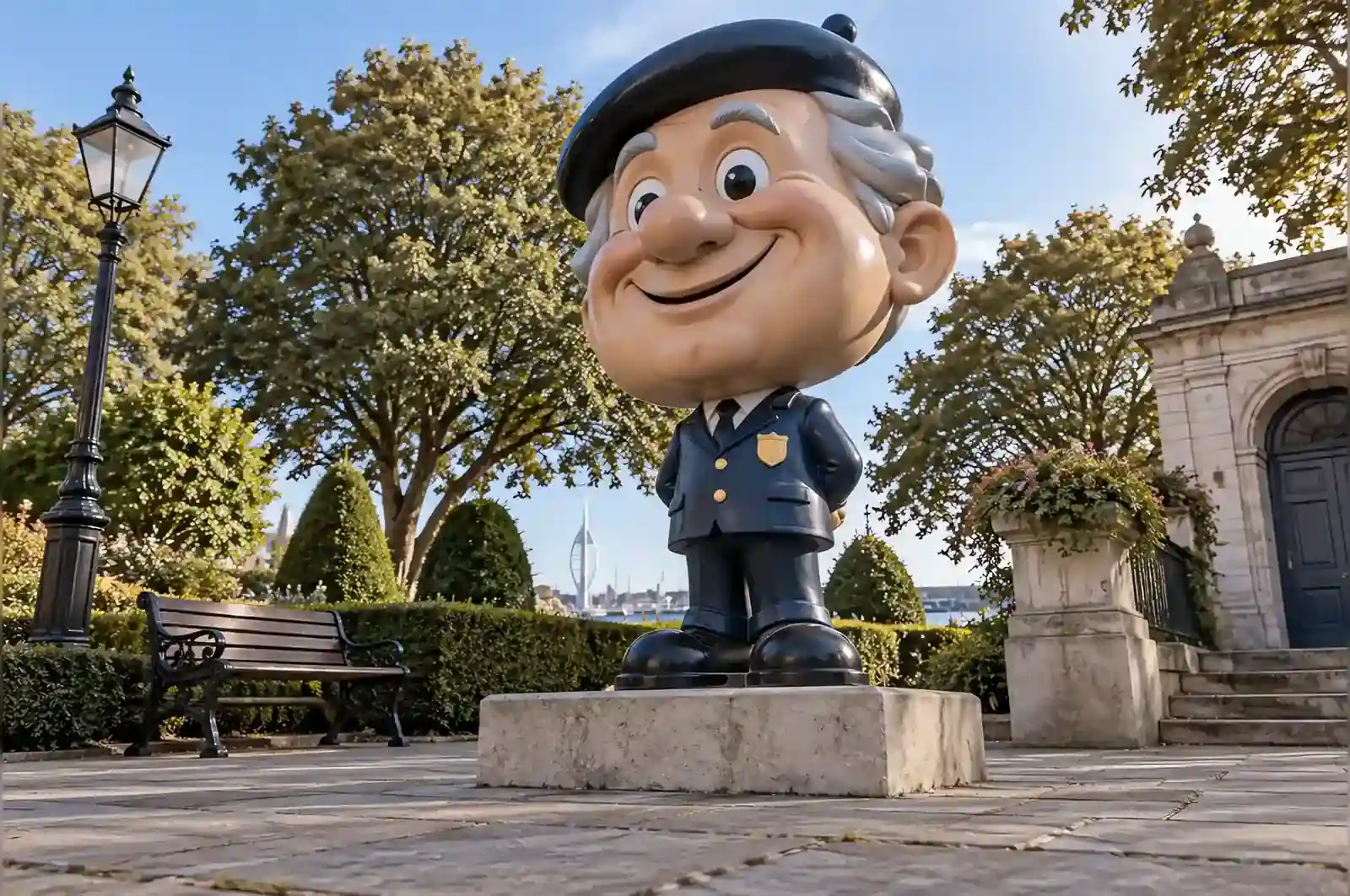
A veteran of the Royal Engineers had served for twenty-two years. His family in Portsmouth wanted him remembered in the public garden where he had volunteered for another fifteen, and they wanted the beret badge reproduced exactly.
What they asked for
A cartoon caricature bust in a beret and uniform, roughly 1.5 m, with the badge hand-painted. Kindly rather than formal — the family were explicit that a stern military likeness would have been wrong for him.
Building it at full size
Built over a steel armature at 1.5 m. The badge came from a photograph taken in the 1970s, and it is the detail the family noticed first. We exaggerate proportion, not identity, so the set of the eyes and the shape of the jaw stayed faithful to the references.
The finish
Gloss-painted fibreglass with hand-painted uniform detail, sealed under a UV clear coat because the piece sits outdoors in a coastal town. Within about 5 km of salt water we would normally discuss 316 stainless for the frame fixings.
Installation
Mounted on a Portland stone plinth in the garden, bolted through. The site is sheltered, which helps both the paint and the fixings.
What the family would not give up
Three things on this commission were fixed before we cut any steel, and none of them was the size. The first was the badge. It came from a 1970s photograph, it had to be hand-painted, and it had to be recognisable at a distance as the badge of the Royal Engineers — not a generic military emblem, the actual badge. The second was the expression. The family were explicit that the piece had to read as kindly, so the sculpting brief allowed no room for a formal, chin-up military pose. The third was the placement: outdoors in a public garden, in a coastal town, on a plinth in the open.
If the badge had not needed to be exact, we could have painted it more freely and saved the time spent matching the reference photograph. If the tone had not had to be kindly, the face would have been far quicker to model, because a formal portrait relies on a more forgiving set of proportions. And if the piece had been for indoors, we would have dropped the UV clear coat and used standard fixings, because the coast and the weather are what drove those two decisions. The size, by contrast, was the one thing the family did not insist on — it was chosen to suit the garden, not the other way round. At 1.5 m it reads clearly from the path without dominating the planting, and at that height the steel armature stays light enough to be set on a plinth rather than needing its own footing.
The clear coat, the fixings and the sea
The piece is 1.5 m of gloss-painted fibreglass over a steel armature, bolted through a Portland stone plinth, within about 5 km of salt water. That combination decides how it is looked after more than any other single fact. Salt-laden air is hard on a clear coat: it carries moisture and salt onto the surface, and over time it is what dulls a gloss finish first. The UV clear coat is therefore not decoration, it is the working layer, and the sheltered garden is doing part of the maintenance work for us by cutting down both wind and direct exposure.
In practice that means the piece needs a periodic wash to lift the salt film off the paint, and an inspection of the clear coat for any patch that has worn or been chipped, which is touched up before water reaches the paint beneath. The frame fixings are the second thing the sea decides. Within about 5 km of salt water we use 316 stainless rather than the galvanised alternative, because standard fixings corrode at the coast; bolting through the plinth keeps the load on the stone and out of the sculpture itself. Both decisions cost money on paper and save it over the life of the piece.
The three questions your brief should answer first
This commission is a useful template, because it shows the three things a buyer settles before a quote means much. First: does the likeness need to be exact? Here the badge and the set of the face had to match a photograph, which is why the sculpting and the hand-painting took the time they did. If you only need a character that is recognisably your subject and not an exact copy, the brief is lighter and the price moves with it.
Second: where is it going to live — indoors, outdoors in a sheltered spot, or open coastal air? That single answer decides whether you need a UV clear coat and 316 stainless fixings, and it is the difference between a piece built for a gallery and a piece built for a harbour town. Third: what scale do you actually need? At 1.5 m this is a garden piece; smaller sizes use a lighter armature, and the point where a piece stops being portable and starts being installed is usually the one that changes the budget. Settle those three and a quote is a formality.
None of the three is about material. On a commission like this the fibreglass, the armature and the gloss finish are close to fixed once the size is set; the decisions that actually move the price are the likeness, the exposure and the scale.
What it cost
1.5–2.0 m fibreglass surveys at $900–$5,900. This piece came in at $3,900 delivered and installed, eight weeks from 3D approval.
They reproduced his beret badge from a 1970s photograph. That is the detail the family noticed first.
The Ashcombe Veterans' Trust