Tattoo-Flash Cartoon Veteran — Regimental Museum, Bovington
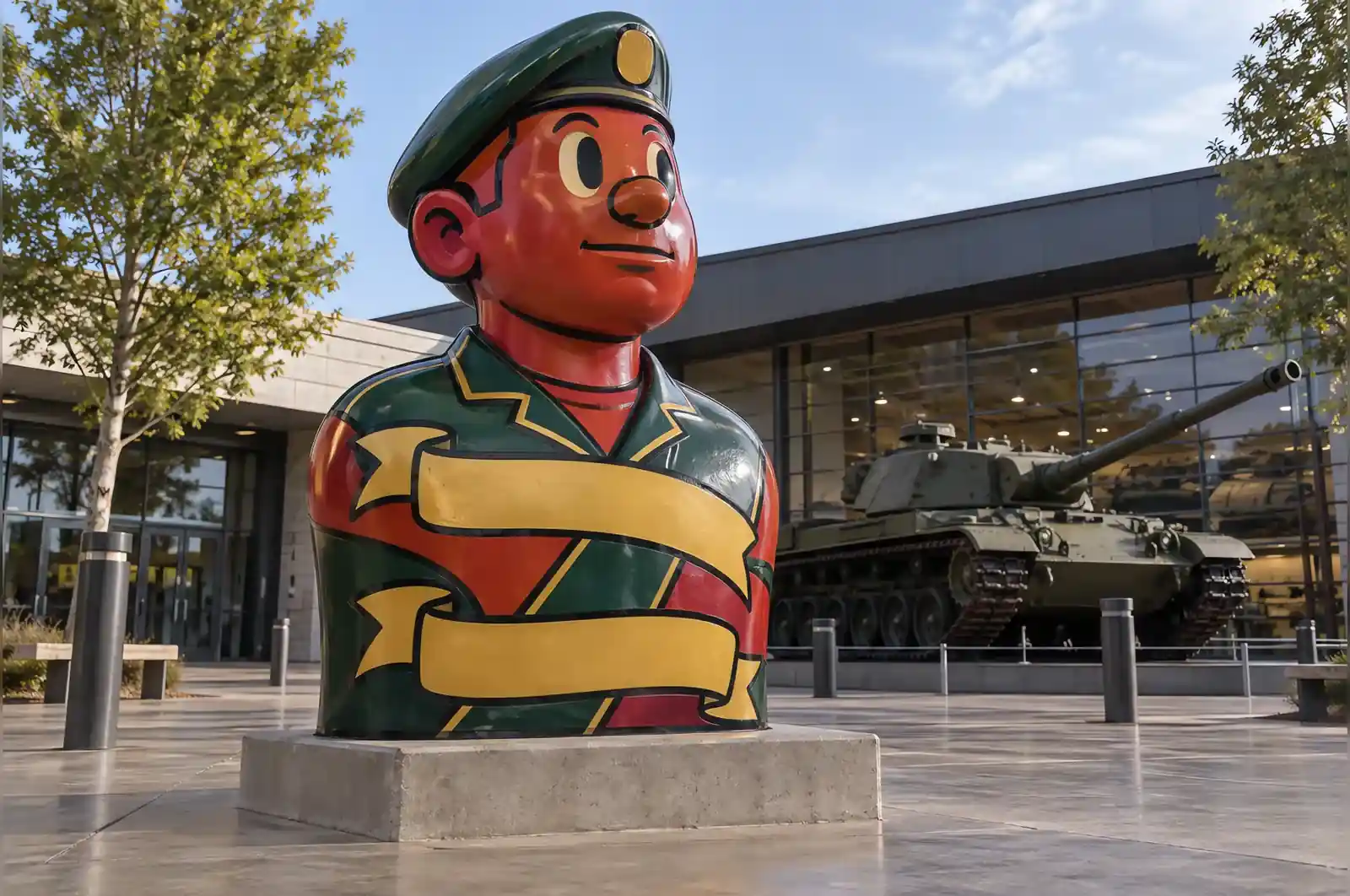
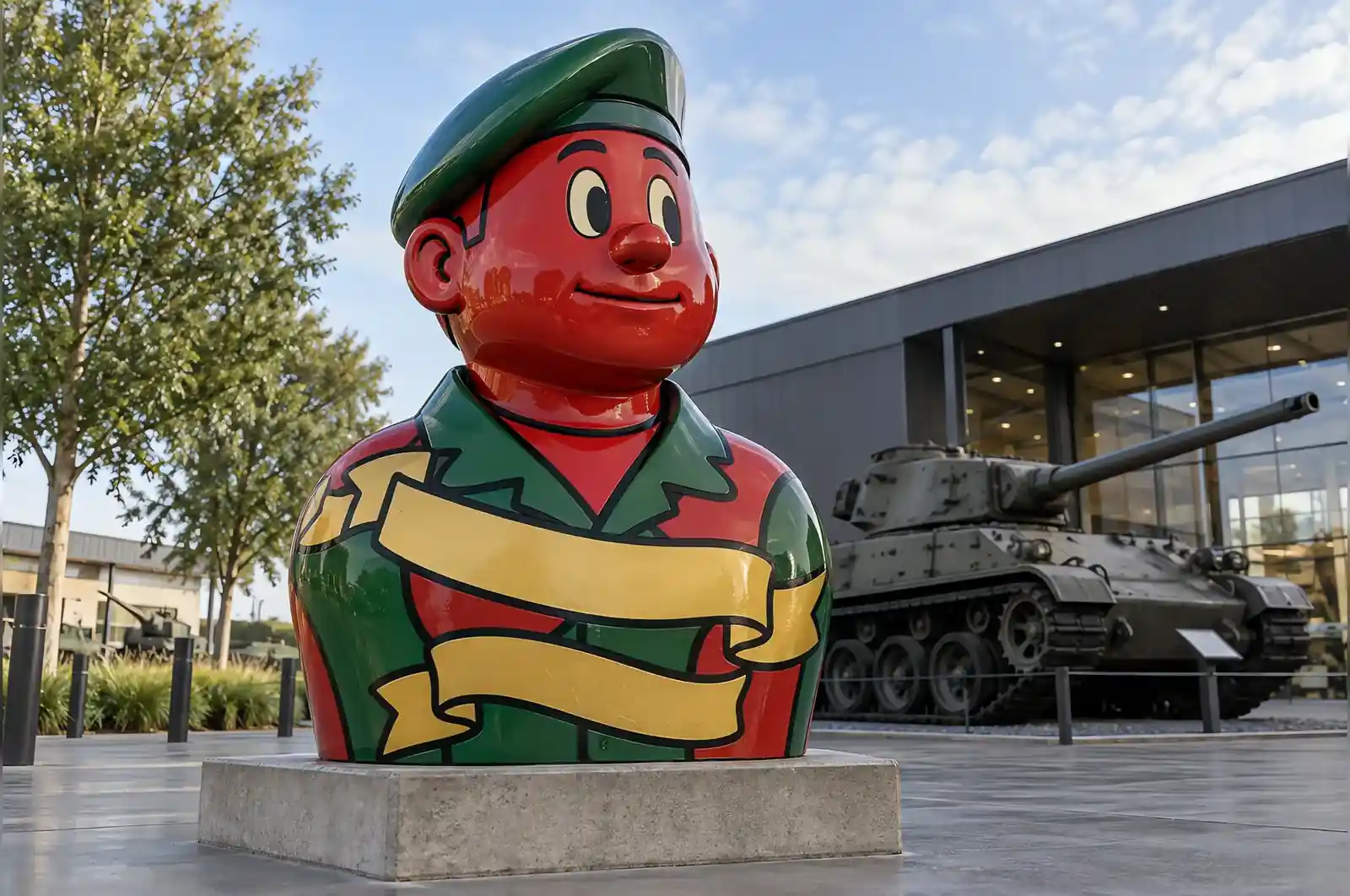
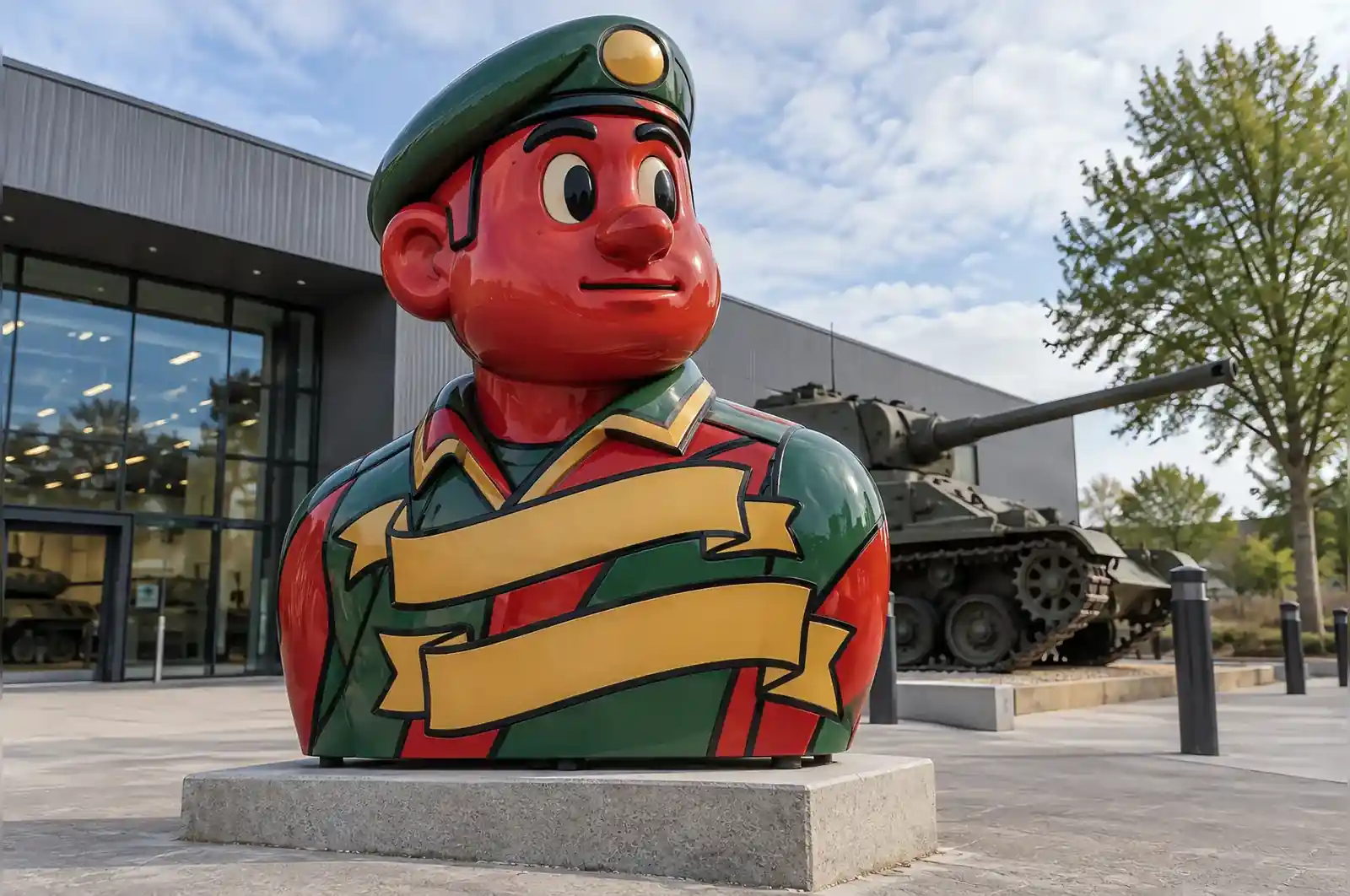
A regimental museum asked for a bust of a veteran, and then asked the harder question underneath it: how do you make a bust of somebody who is still alive in a room full of men who are not.
Tattoo flash, as a shared vocabulary
Soldiers have been marking each other with the same images for a hundred years, and the museum’s own collection of flash sheets is the reason the finish is what it is. The bust is painted in traditional tattoo-flash style: heavy black outlines around every form, flat unshaded fills of deep red, gold and bottle green, and two blank ribbon banners crossing the chest. The banners carry no lettering at all, deliberately. Everybody who looks at the piece fills them in with a name, and the name they choose is usually the person they came in with.
Why the outlines have to be real
A flash sheet is a drawing, and a drawing does not survive being transferred onto a curved head. These outlines are routed grooves 4 mm wide and 1.5 mm deep, filled with black, so that the line holds its weight as the head turns away from the light instead of thinning to nothing at the ear.
Skin, without faking it
The one thing the museum asked us not to do was paint a tattoo onto the skin. The figure has no tattoo markings of its own; the tattoo vocabulary sits in the paint scheme rather than on the body, which keeps the piece legible as a sculpture and avoids imitating something personal that belongs to somebody else.
In the gallery
It sits at 1.5 m at eye height in the middle of the room rather than against a wall, so that it is walked around rather than looked at. Visitors work their way past it and find the banners on the second pass. What the museum reports about that is in the panel above.
The piece is quiet for about thirty seconds and then it is the loudest thing in the room. That is entirely the banners.
A regimental museum in Bovington, United Kingdom