Chalkboard Cartoon Child — School Entrance Sculpture, Ghent
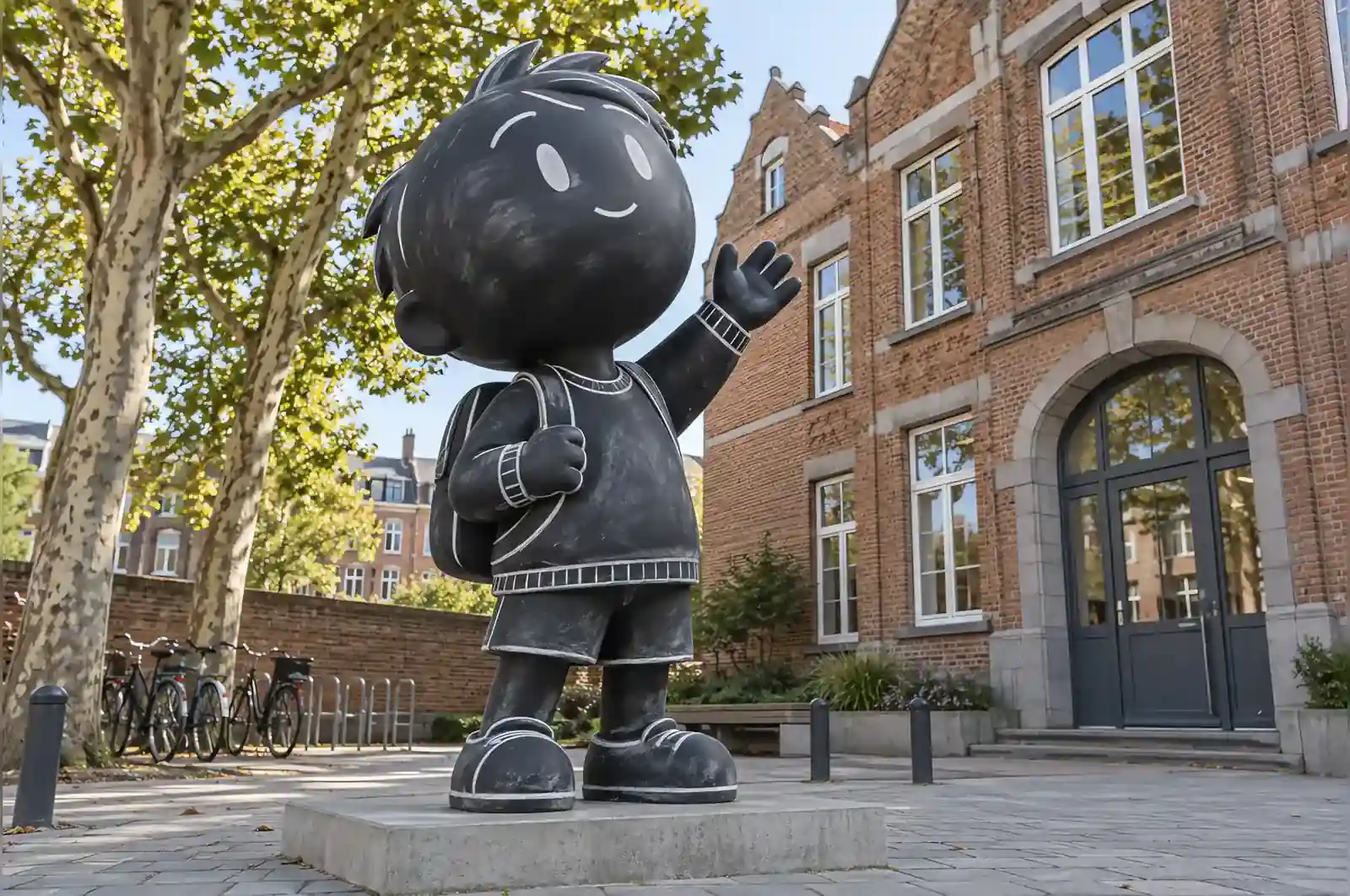
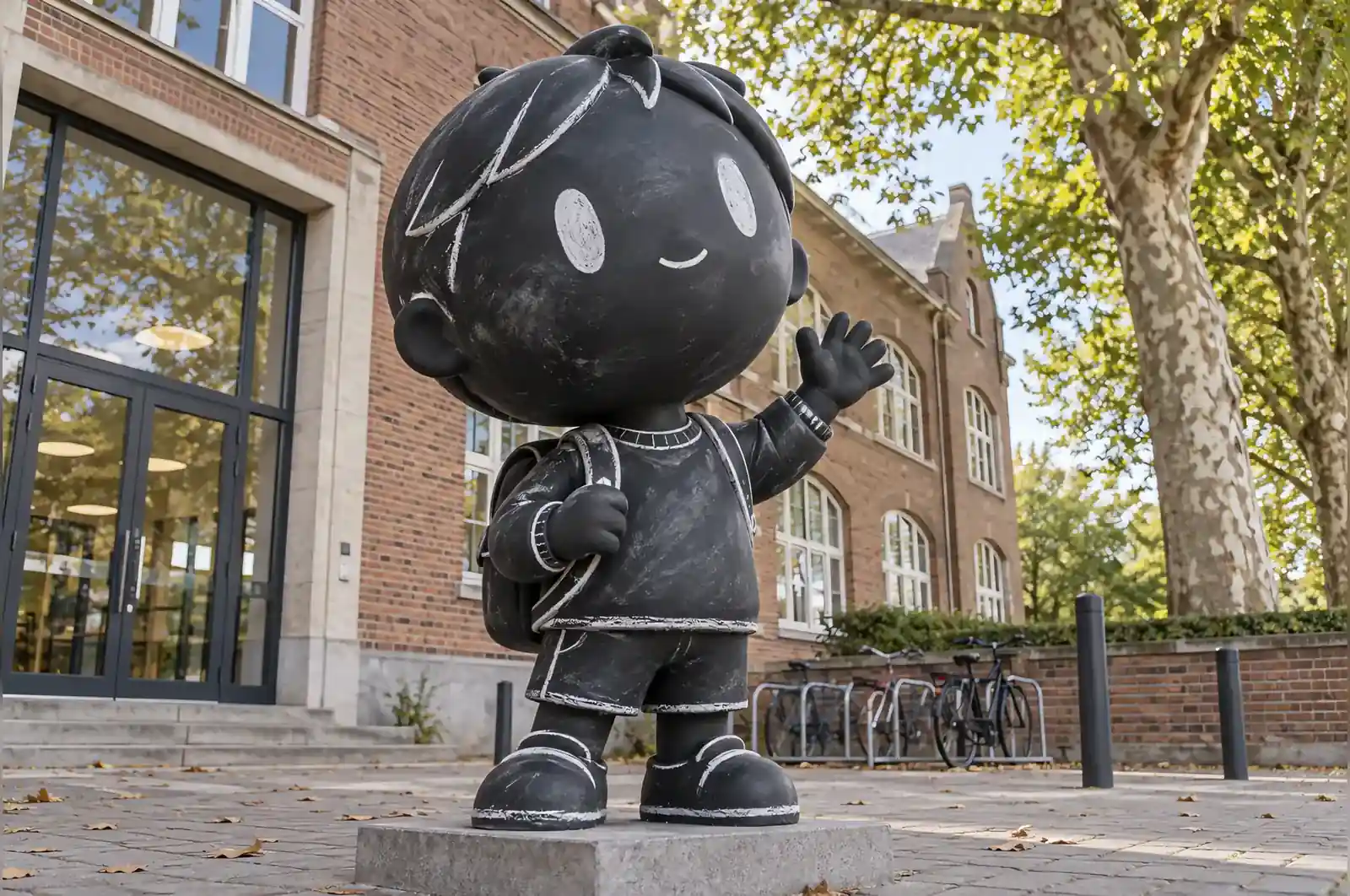
A school asked for a figure of a child, and then spent two meetings working out how to avoid the obvious problem, which is that a portrait of one child in a playground belongs to that child and to nobody else.
The answer was to draw it
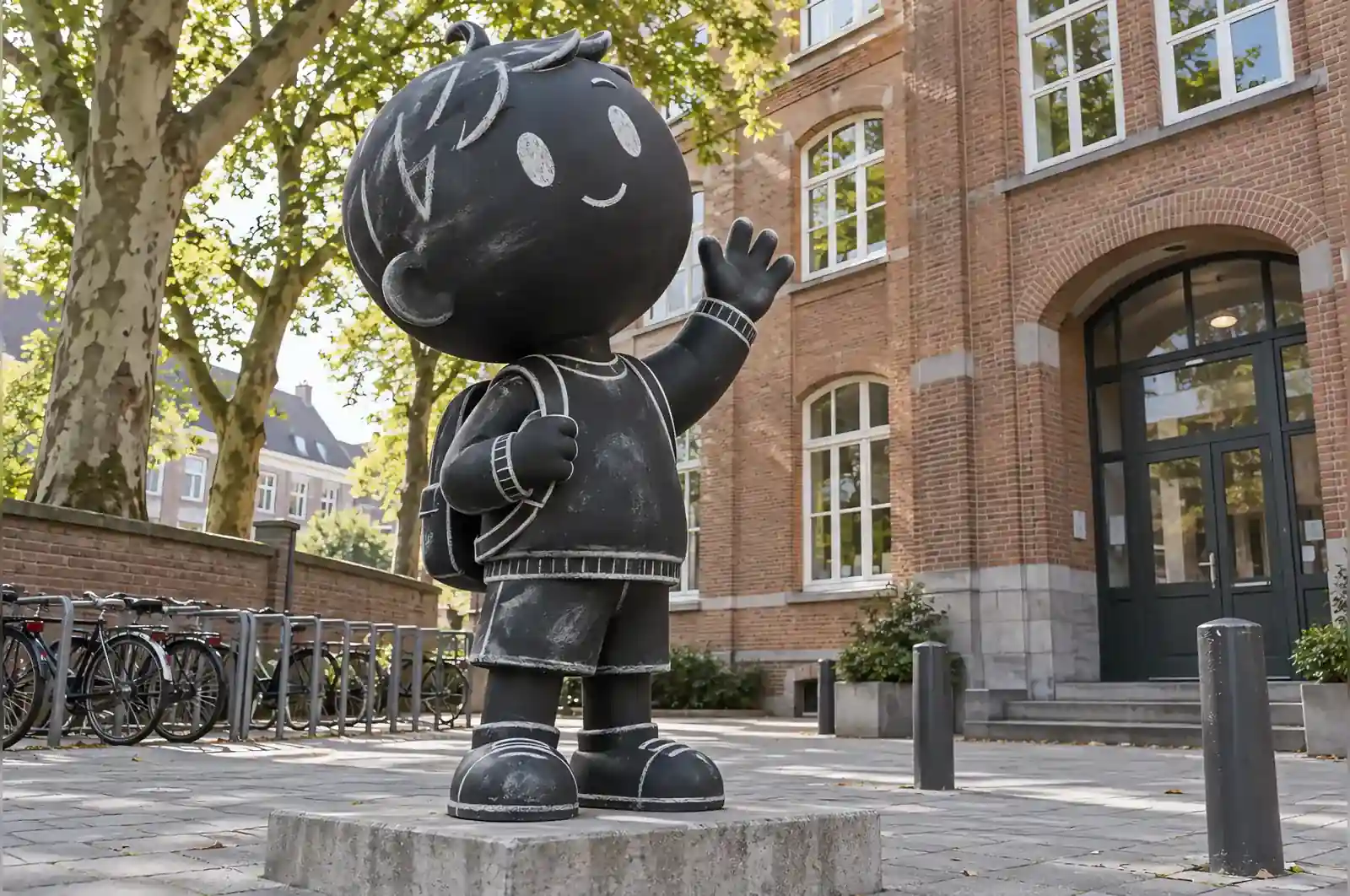
The finish is a blackboard: a dead-matte near-black ground with white chalk linework over it, and the figure itself is only partly drawn. The head, the backpack and the raised hand have full chalk outlines, the torso is left as a worked-out shape with three swept lines suggesting the jumper, and the legs fade out entirely below the knee so that the piece reads as something being drawn while you look at it.
Making chalk behave on a curved shell
Chalk lines on a three-dimensional body are not the same as chalk lines on a board, because the board does not curve away from the light. The outlines were routed as shallow grooves about 1.5 mm deep and then filled with a matte white, so the line thickens and thins with the surface rather than sitting on top of it. The smudges are real: two areas where the white was dragged and partly wiped back, placed where an arm would have rested on the piece while drawing.
The matter of the eyes
Two plain ovals and a short curved line. Anything more specific would have made the figure into a portrait again, which was the thing the school was trying to avoid. The whole face is nine strokes of chalk.
At the gate
It stands beside the entrance at 1.8 m, at the height of the oldest children in the school and a little above the youngest, facing the gate rather than the building so that it is seen on the way in. The client’s own remark is in the panel above.
The children argue about which of them the chalk outline is. It is none of them, and we have never corrected anybody.
A primary school in Ghent, Belgium