Duke — Cartoon Horse at a Park Entrance, Wellington
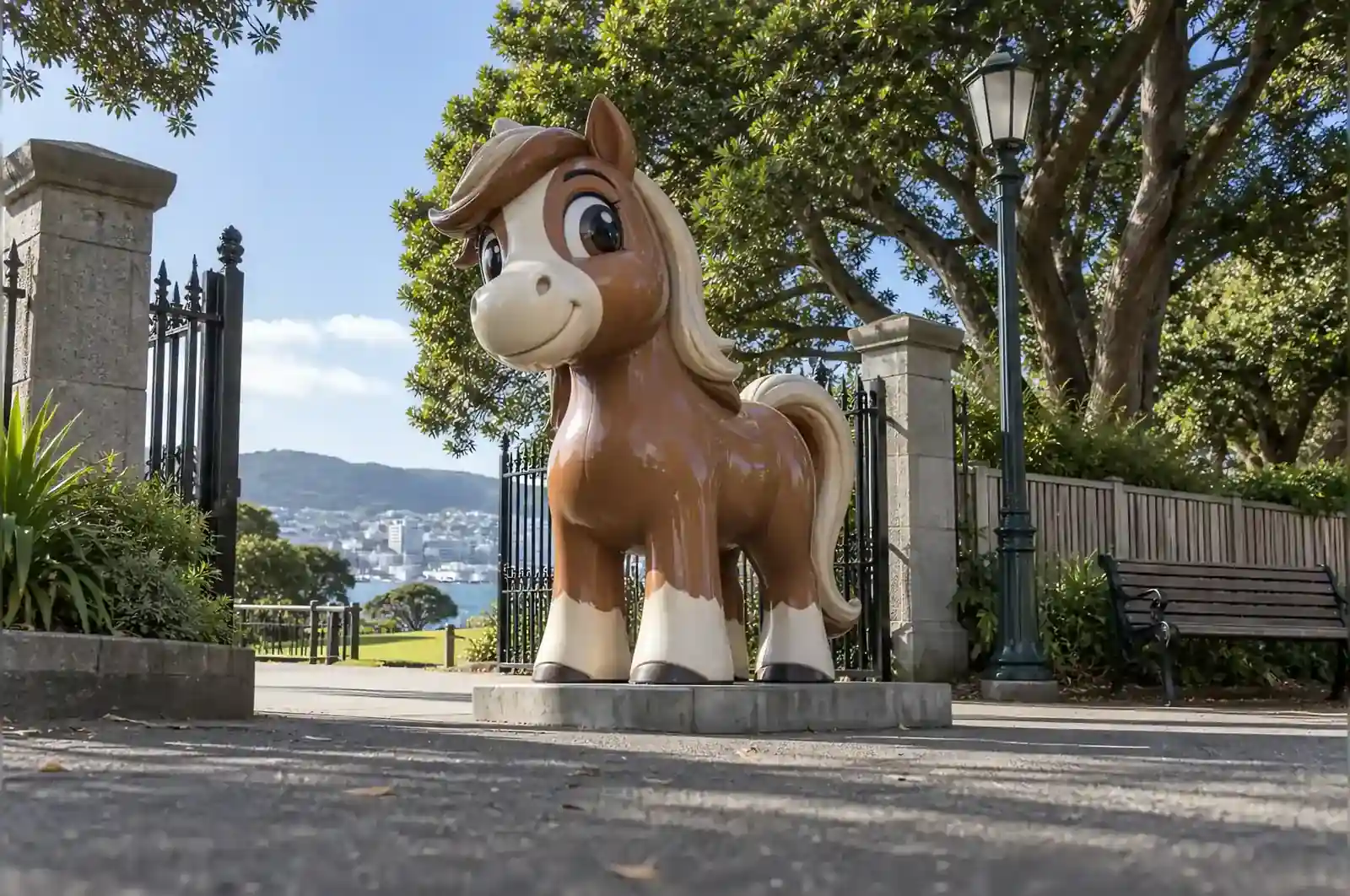
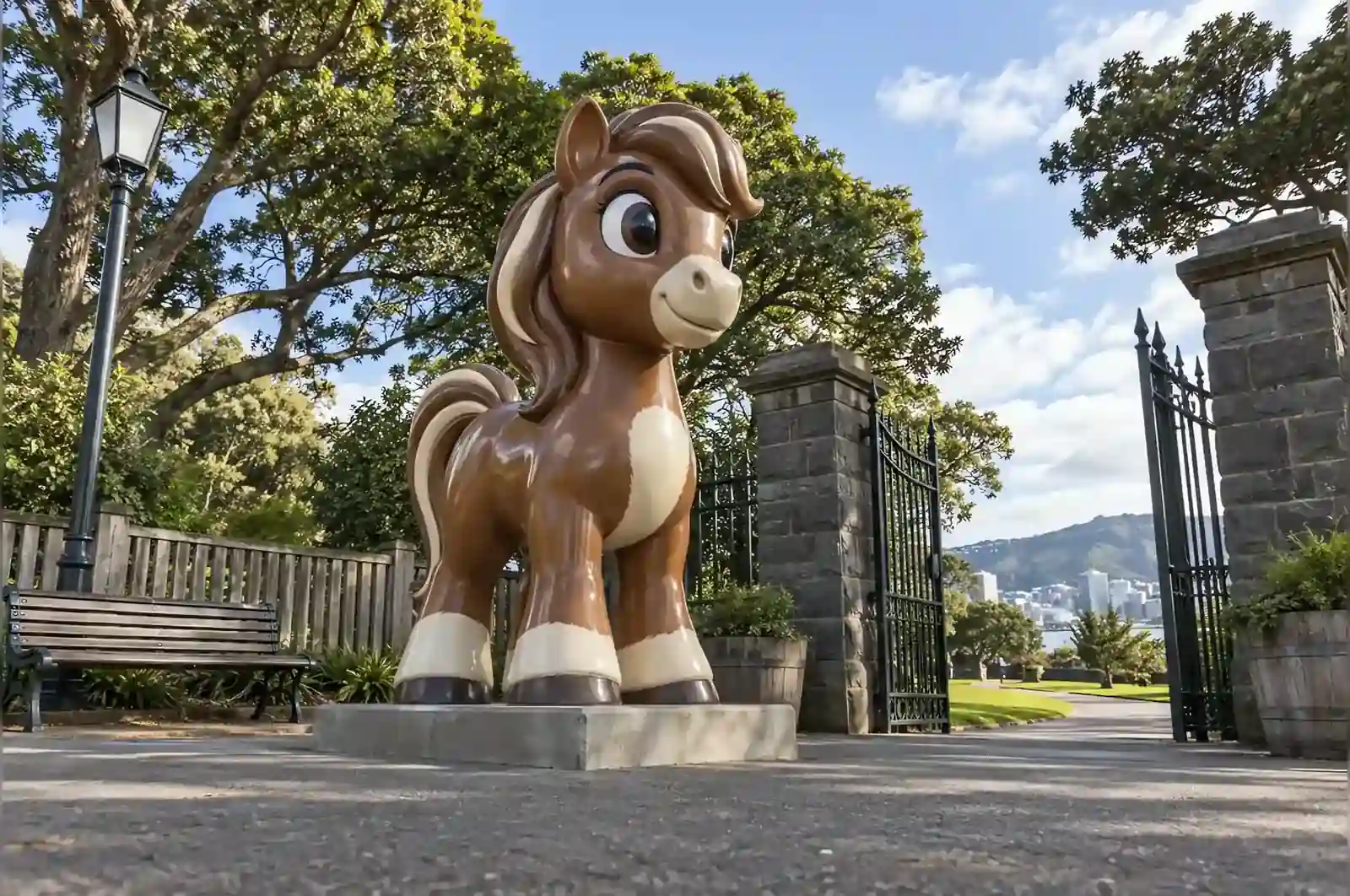
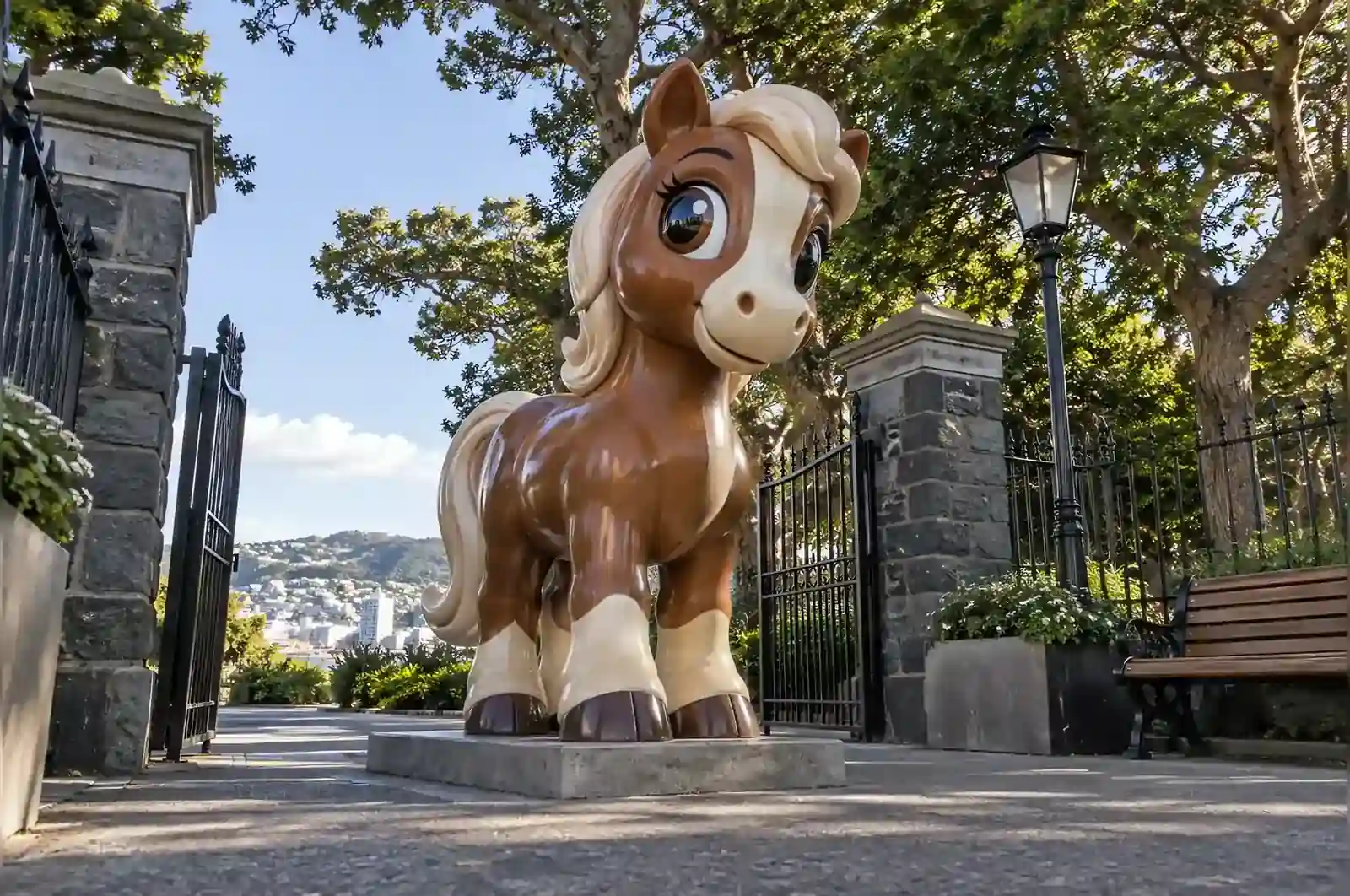
Duke stood at the gate of a public park in Wellington where riders come through all day. The brief came from a community group who wanted something cheerful at the entrance rather than another bronze dignitary.
What they asked for
A cartoon horse at park-entrance scale — big enough to read from the road, and stylised enough that children would want to be photographed beside it. Roughly 2.4 m tall, with a mane that reads in silhouette.
Why the size, finish and site were non-negotiable
The three decisions on a job like this that you cannot reverse later are the height, the surface and where it stands, and on this commission all three were fixed by the gate itself. Duke had to read from the road, so 2.4 m was the floor rather than a preference; below about 2 m the head and mane start to lose the silhouette that makes a cartoon horse read at thirty metres. Because the piece stands outdoors in full Wellington weather, the finish had to be a multi-layer automotive system sealed under a UV clear coat — a satin or matte interior finish would have been chalking within a couple of years. And because the pad sits at a working park gate, the frame had to be split into three sections so it could be craned in and welded where it stands.
Change any one of those and the whole commission changes shape. Indoors, the same horse could have come down to about 1.5 m, taken a softer finish, and used roughly half the paint time. On a sheltered garden path it would read close enough to carry finer airbrush detail in the markings. At the gate, none of that applied — the size, the gloss and the weather-proofing were the price of putting it where people actually see it. The lesson is that the placement, not the subject, sets the budget on an outdoor commission of this kind.
Building it at full size
At 2.4 m the steel frame is drawn rather than improvised, and this is the point where a project stops being a sculpture and starts being a small engineering job. The sculpture was built in three sections and assembled on site. Getting a piece this size wrong at the frame stage is the most expensive mistake available, which is why we spend the time there.
The finish
Gloss-painted fibreglass in chestnut with cream markings, airbrushed and then sealed under a UV clear coat. At this scale the paint work takes almost as long as the form.
The clear coat is the part that wears
The layer that keeps this piece looking right is also the layer that takes the weather, and at a park gate it is worth treating as a service item rather than a permanent surface. The UV clear coat is sacrificial: it is the part that chalking, bird droppings and road grime attack first, and it is the reason the automotive gloss underneath still reads as glossy several years in. Wellington’s wind and salt air accelerate that, so the practical care is a plain water wash-down once or twice a year, done before deposits have a chance to etch the surface.
The other place that wears is the join. Because the piece is built in three sections and welded on site, the weld joints are the only part of the surface that is not continuous, and they are finished and sealed but also the first place a hairline crack shows if the pad settles. A visual check of the joint line during the same wash-down catches that early, while it is still a surface issue rather than a structural one. The engineered steel frame underneath is over-specified at this size and is not expected to need anything, but it is hidden, so the only realistic way to monitor it is through the surface that covers it.
Installation
Three sections craned onto a prepared concrete pad at the gate, welded and finished on site. Total install was two days, which is quick for the size.
What this means for your own brief
Before asking for a quote on something similar, settle three questions and you will get a much tighter number.
First, the viewing distance. If the piece has to read from a road or across a park, plan for the 2.4 m class and the three-section build that comes with it. If it is for a close-up garden or an interior, you can go smaller, and the whole job gets cheaper and faster.
Second, indoor or outdoor. Outdoor means a UV-stable clear coat and a weather-proofed joint. Indoor means you can spend the same budget on more paint detail instead of on protection, because the weather is no longer doing the work of a second material.
Third, is the subject a real animal or a generic character? Duke is a named, recognisable horse with specific chestnut and cream markings, so the airbrush work is a genuine line item. A generic cartoon horse is quicker, because no one has to match a reference photograph. On a commission like this the difference usually shows up in the paint, not the form.
Answer those three and a quote is mostly a matter of scale and finish, which is why they are worth settling before you ask for one rather than after.
What it cost
Above 2 m, surveyed fibreglass runs $3,800–$15,000. This commission came in at $11,200 delivered and installed, twelve weeks from 3D approval.
He stands at the gate where the riders come through. People stop for photographs every single day.
The Whitcombe Family