Cartoon Family Group of Five — Patchwork Sculpture, Utrecht
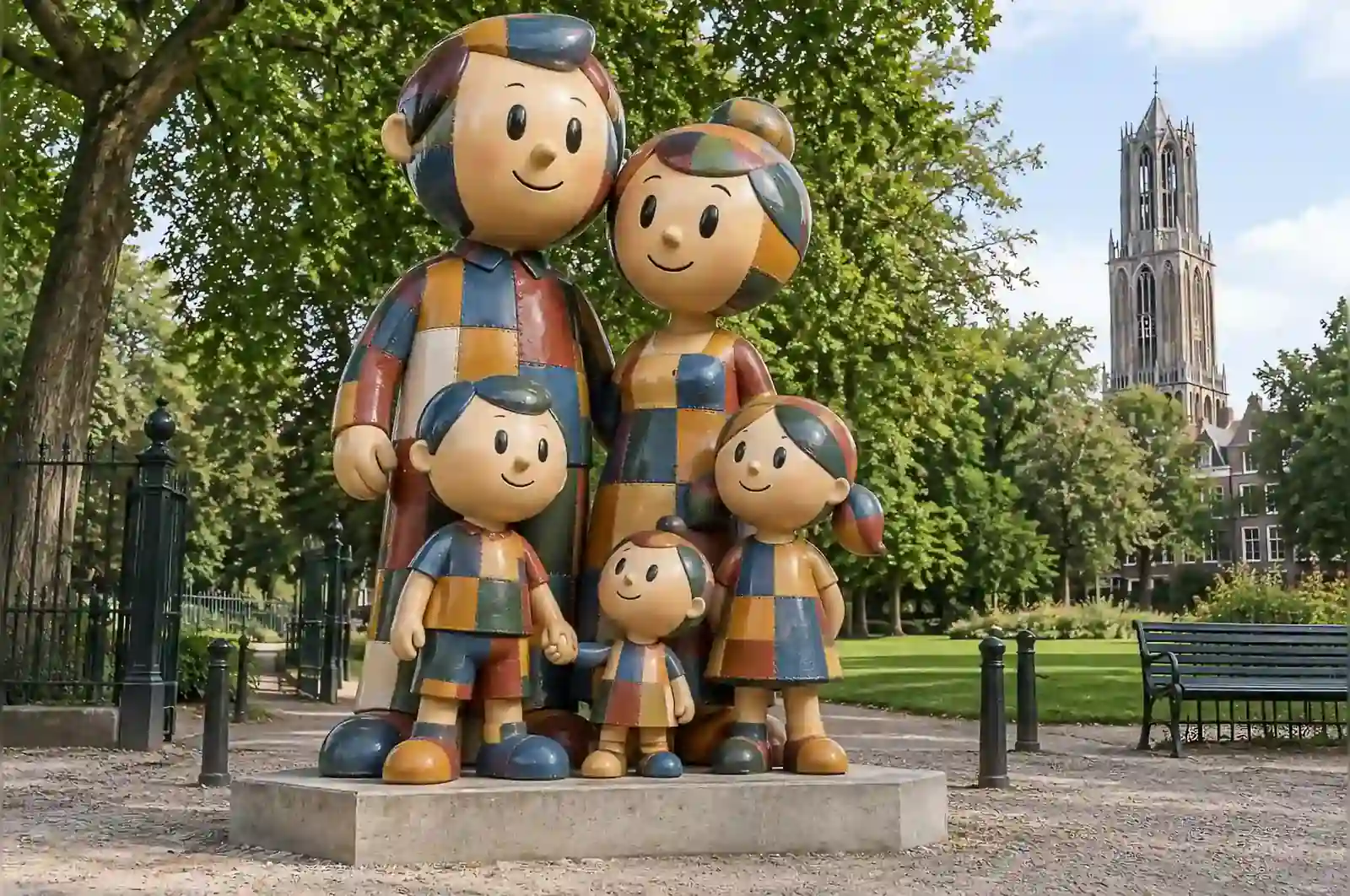
The centre runs a clothes swap for local families. Outgrown children’s clothes come in, get sorted, and go out to the next family. At some point someone there worked out that the most durable record of a childhood in that district is a pile of fabric.
The brief
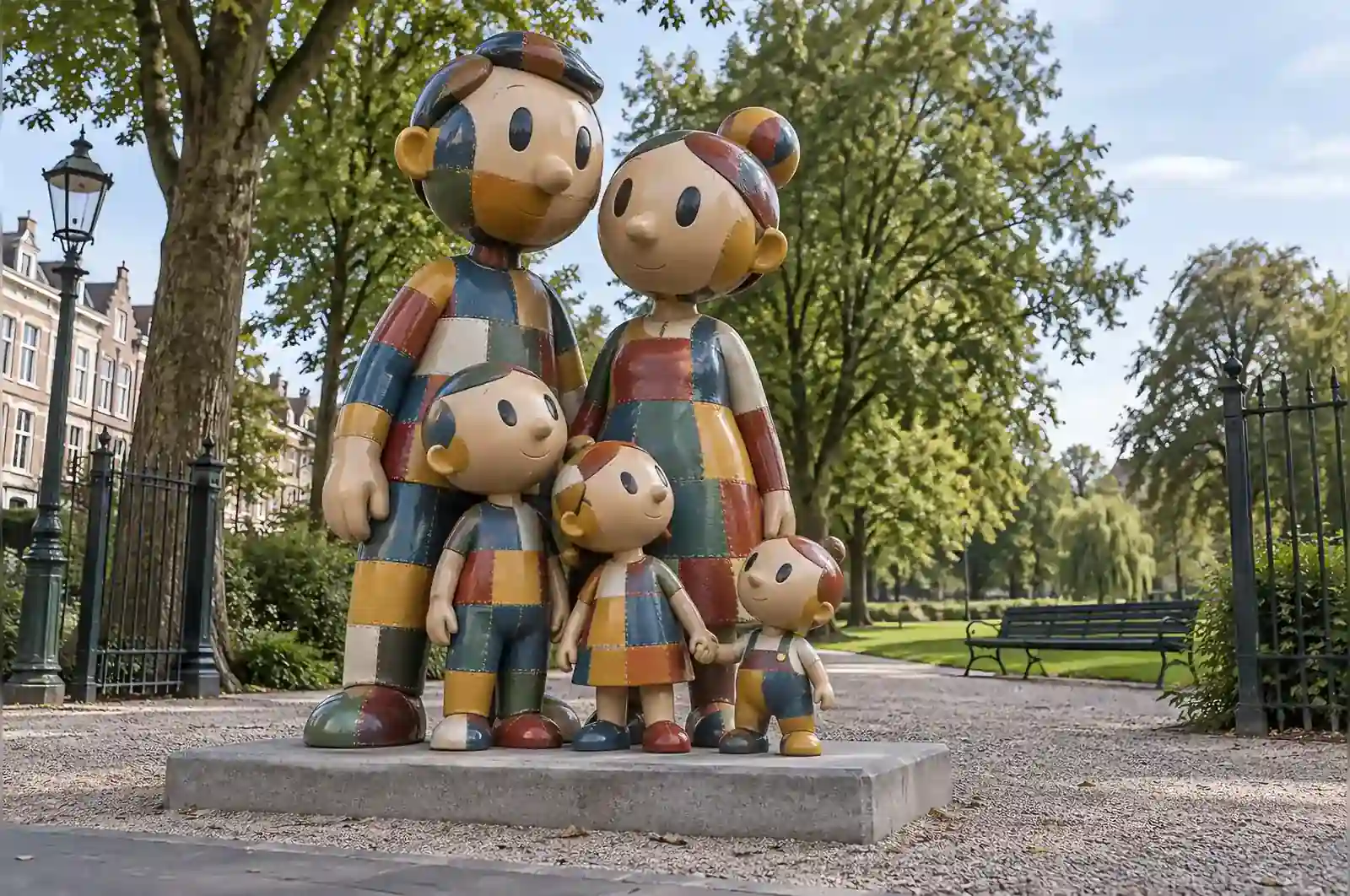
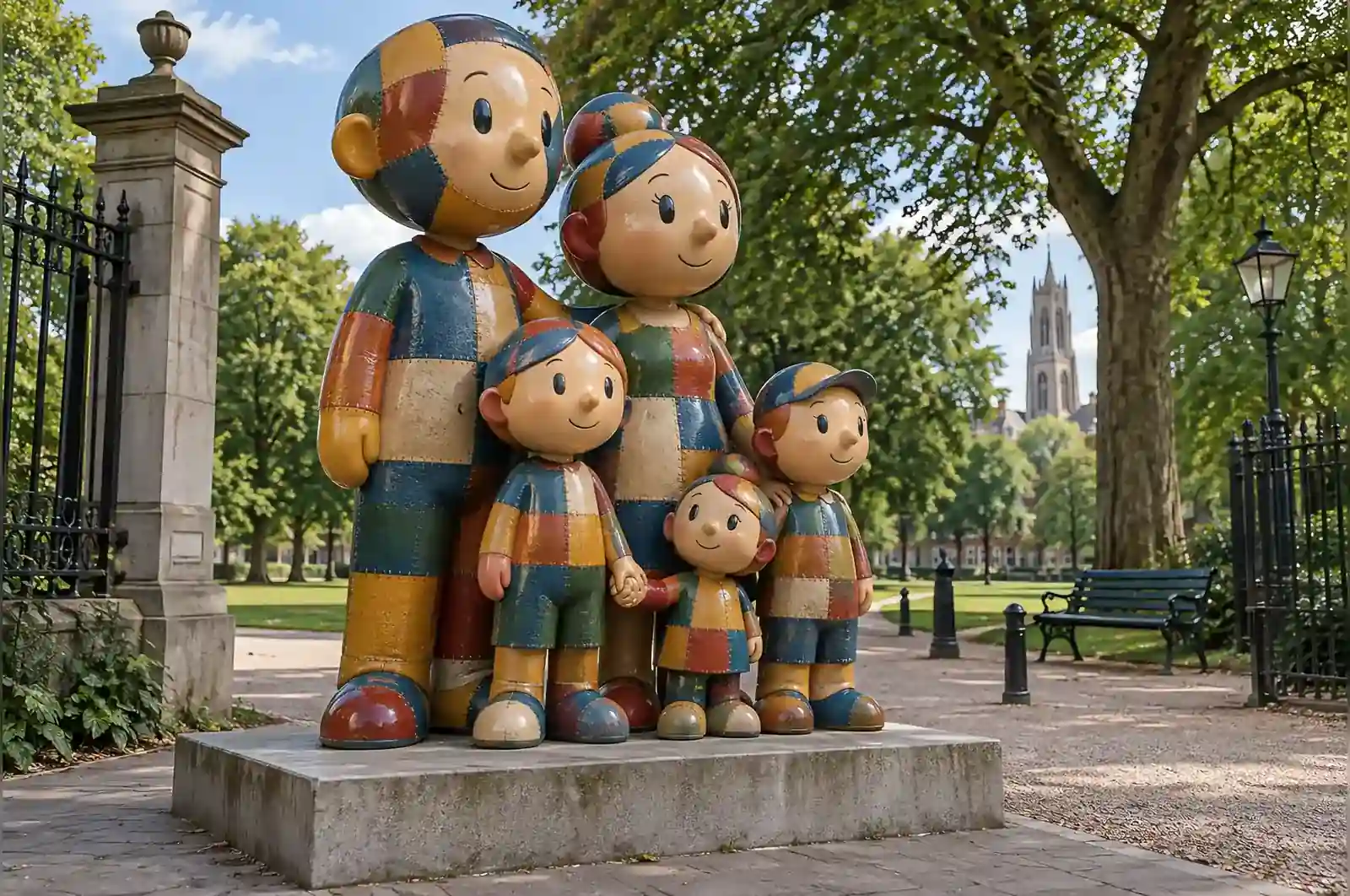
A family of five at the park entrance, about 2 m, cartoon proportions, no recognisable faces. The material instruction was the interesting part: the surface should be a patchwork made from the clothes, and the patches should be big enough that people who donated them would recognise their own garments.
Building a patchwork on five figures
Twenty-three colours, and the allocation was done as a real quilt would be: no adjacent patch repeats a colour, and each figure is cut by the seams in a different direction so the group does not look striped. The seams are modelled as shallow recessed grooves about 3 mm wide, filled with a paler cream stitch line, so the light picks out every one of them.
Each patch is also given a slightly different sheen. Real patchwork never matches, because the fabrics are different, and that inconsistency is the only reason the surface reads as fabric instead of as a pattern.
The figures themselves
Composition was harder than the surface. Five cartoon people who are all the same shape read as a row of skittles, so we varied the head-to-body ratio with age: the youngest child is almost all head, the adults have the smallest heads relative to their height. Then we turned the group slightly inward so that the two smallest figures sit inside the silhouette formed by the three taller ones.
At the park gate
It stands on the path just inside the entrance, where it is passed by every visitor and read against the trees. The centre’s swap day is now held in front of it, which was not planned and is entirely appropriate.
Every patch is a garment my children actually wore. I did not expect to recognise them, and I did, immediately.
A childcare centre in Utrecht, Netherlands